


NATIONAL NEWS - South Africans could soon pay substantially more for one of the country's favourite winter meals after an administrative certificate dispute blocked oxtail imports from Argentina, the source of around 70% of South Africa's supply.
The Association of Meat Importers and Exporters South Africa (AMIE) has called on the Department of Agriculture (DoA) to urgently review the current sanitary certificate and restore what it describes as a practical, scientifically justified route for imports before retailers and consumers feel the full impact.
Local producers are unable to supply the volumes required by the market, particularly during winter when oxtail stew and potjie remain popular meals.
Importers and retailers are already carefully managing available stock, while consumers could face higher prices if supplies continue to tighten.
Certificate dispute at the centre of the problem
According to AMIE, the impasse began after sanitary certificates for bovine products included a reference to Ovine Scrapie, a disease that affects sheep and goats, not cattle.
Industry stakeholders and Argentine representatives proposed a simple amendment by removing the irrelevant wording from bovine certificates.
Instead, AMIE says the Department introduced a far more complex certificate containing extensive Foot and Mouth Disease (FMD) biosecurity requirements that exporting countries would find extremely difficult to meet for bone-in beef products, including oxtail.
"This should have been a simple administrative amendment," said AMIE CEO Paul Matthew.
"Ovine scrapie does not apply to cattle, and removing that reference from bovine certificates should not have become a regulatory obstacle of this scale. Argentina has the product, South Africa needs the product, and consumers should not lose access to oxtail because of a certificate issue that can be easily resolved."

More than R100 million worth of oxtail at risk
AMIE estimates that South Africa could lose approximately 1,000 tonnes of imported oxtail during the winter season, representing more than R100 million worth of product.
Importers are reportedly already cancelling winter contracts as they balance stock levels and shipping lead times against the unresolved certification issue.
Matthew said South Africa cannot produce enough oxtail locally to satisfy demand.
"Consumers don't care about veterinary certificate wording, but expect affordable food on supermarket shelves. When a straightforward administrative correction turns into months of delay, it's South African families who ultimately pay the price."
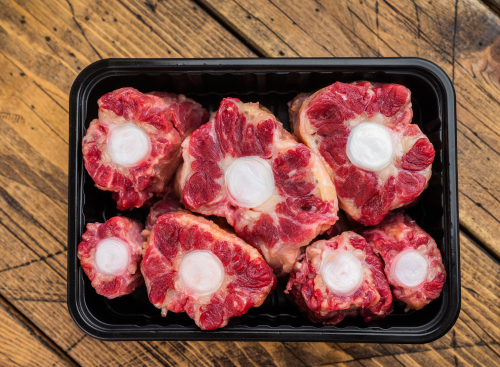 Oxtail. Photos: Supplied
Long-standing agricultural relationship
AMIE pointed out that Argentina and South Africa have worked together for many years in managing and combating Foot and Mouth Disease.
Argentina is one of the countries supplying FMD vaccines used in South Africa and has collaborated extensively with local authorities on disease management and control frameworks.
The association argues that the current deadlock is therefore not the result of inadequate biosecurity measures or poor cooperation, but rather an unnecessarily burdensome administrative process.
AMIE calls for urgent government intervention
AMIE said it remains committed to constructive engagement with government and has already raised the matter with the Deputy Director-General of Agriculture while also engaging with the Argentine embassy in an effort to speed up a resolution.
The association stressed that it fully supports South Africa's biosecurity requirements but believes they should remain scientifically justified, practical to implement and applied in a way that protects both animal health and consumers.
"This issue is now bigger than one certificate clause, and corrective action must be expedited," Matthew said.
"This situation serves as yet another example of how unnecessary administrative delays are affecting both South Africa's export ambitions and the availability of affordable imported food."
‘We bring you the latest Garden Route, Hessequa, Karoo news’