

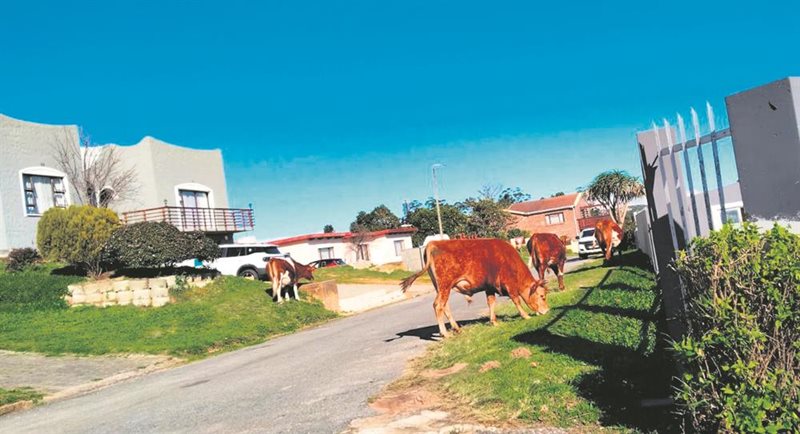
KNYSNA NEWS - Who should be held accountable for losses and damage to vehicles caused by roaming cattle on public roads? This is the question frustrated residents and motorists in the greater Knysna continue to ask following a series of accidents involving stray livestock on the N2 between Knysna and Plettenberg Bay.
The issue once again shines the spot-light on road safety, enforcement and accountability. While motorists are left to deal with damaged vehicles, insurance claims and financial losses, many are asking who bears responsibility when livestock are allowed to roam freely on public roads.
Recent crashes fuel frustration
One of the most serious incidents occurred near Brackenhill when 23-year-old Hornlee resident Deveigon Hendricks hit a cow as he was returning home from rugby practice in Plettenberg Bay. Although he escaped with minor injuries, his vehicle was written off.
His father, Izak Hendricks, said the crash could easily have claimed his son's life and questioned why livestock owners are not held accountable when their animals stray onto busy roads.
The family's frustration was heightened when another cow reportedly crossed the N2 as the emergency services were still attending to the accident scene.
In a separate incident, motorist JH Loots also lost his vehicle after striking a cow near the Buffalo Bay turn-off. He asked who should be held responsible for keeping national roads safe, and called for decisive action before a fatal collision occurs.
Municipality outlines progress
Responding to the concerns, Knysna Municipality communications manager Christopher Bezuidenhout said the municipality has made steady progress in strengthening its approach to managing roaming livestock.
"A livestock impoundment trailer has been procured and registered, and will be deployed shortly. The municipality is also engaging neighbouring municipalities and relevant organisations to conclude a memorandum of understanding for access to pound facilities, which is a key requirement for the full implementation of the livestock impoundment programme," he said.
Bezuidenhout explained that until suitable pound facilities are available, the municipality's ability to impound stray livestock and enforce penalties against owners remains constrained.
Managing roaming livestock is a shared responsibility involving Knysna Municipality, Sanral, Provincial Traffic, the South African Police Service (Saps), the
Department of Agriculture and other stakeholders.
"To enhance road safety, the municipality continues to work with these partners while increasing law enforcement patrols in collaboration with Provincial Traffic and Sanral. Investigations into specific road incidents fall within the mandate of the relevant authorities."
Measures under way
According to the municipality, efforts to address the problem include deploying the new impoundment trailer, securing access to pound facilities through agreements with neighbouring municipalities, improving livestock identification and owner accountability, and strengthening co-operation with government departments and farming stakeholders.
These initiatives build on earlier plans to enforce the municipality's animal by-laws through a dedicated livestock task team and improved impoundment procedures.
Accountability remains the question
Despite these measures, residents continue to report cattle roaming along sections of the N2 and other public roads across the greater Knysna area.
While the municipality has outlined the progress made and the challenges delaying the full implementation of its livestock impoundment programme, it has not directly answered who is liable for damages suffered by motorists involved in collisions with roaming cattle.
For many residents, that unanswered question remains at the centre of the debate as they continue to call for stronger enforcement, greater accountability and urgent intervention before another serious - or fatal - accident occurs.
‘We bring you the latest Garden Route, Hessequa, Karoo news’