


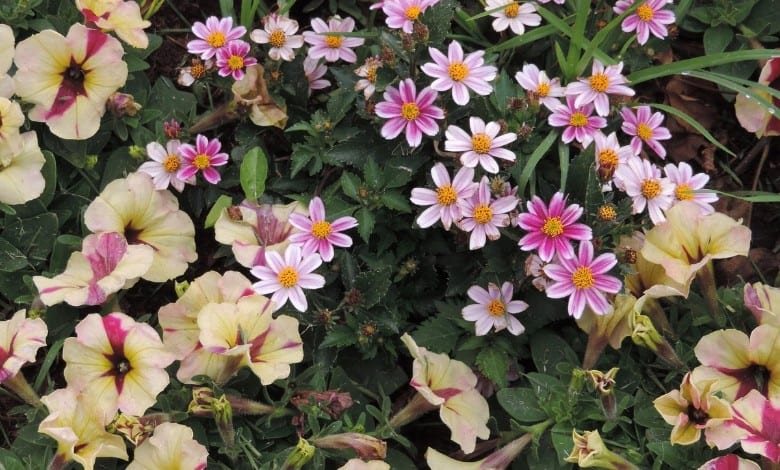
LIFESTYLE NEWS - Empty spaces between shrubs and established plants can make a garden look unfinished. The solution? Filler plants that spread easily, soften garden beds and bring colour and texture to spaces that might otherwise be overlooked.
Filler plants are particularly useful for covering bare soil, filling gaps around slower-growing shrubs and adding interest beneath trees.
Once established, many require relatively little attention and help suppress weeds by preventing sunlight from reaching the soil.
They are not necessarily low-growing groundcovers. Some, such as gaura, euphorbia, Perovskia and catmint, provide height and movement while spreading to fill surrounding spaces.
Depending on the look you want to achieve, fillers can be annuals that provide seasonal colour or longer-lasting perennials that return year after year. Popular choices include coleus, impatiens, petunias, marigolds and nasturtiums, as well as perennials such as bidens, coreopsis and gaillardia.
Many also attract bees, butterflies and other beneficial insects, making them a useful addition to gardens that support local wildlife.
Here are some plants worth considering when planning your next garden makeover.
Colourful foliage that makes an impact
Ajuga 'Rainbow'
Ajuga is a versatile groundcover that grows well in full sun or semi-shade. Available in several attractive foliage colours, it is an excellent choice for adding interest even when plants are not flowering.
Growing approximately 10cm to 15cm high, it can spread up to 90cm, making it useful for covering larger areas.
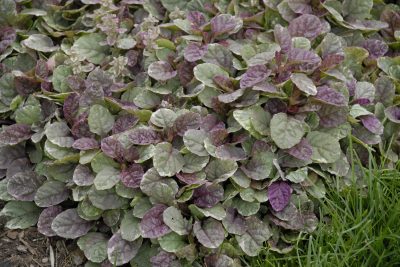 Ajuga ‘Rainbow’.
Coleus 'Trailblazer'
For a splash of colour, trailing coleus 'Trailblazer Road Trip' is an interesting option. Its green-edged leaves, with striking red and burgundy colouring, provide contrast against the lush green foliage of ferns and other tropical plants.
It can be grown as a spreading groundcover in sun or shade and does best in fertile, well-composted soil that drains well.
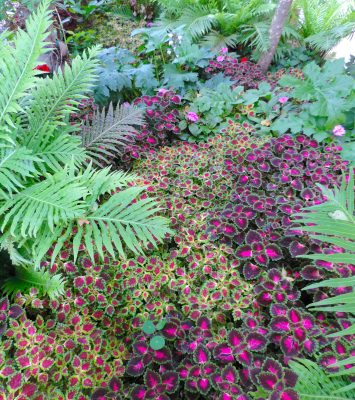 Coleus ‘Trailblazer’.
Centaurea 'Silver Swirl'
Silver foliage can brighten a garden bed while creating a softer contrast than white-flowering plants. It also provides an attractive backdrop for darker-leaved plants and flowering shrubs.
Centaurea 'Silver Swirl', also known as Snowflake Dusty Miller, has distinctive silvery-white leaves with wavy edges. It is drought tolerant, requires little maintenance and grows best in full sun. It also has minimal fertilising requirements.
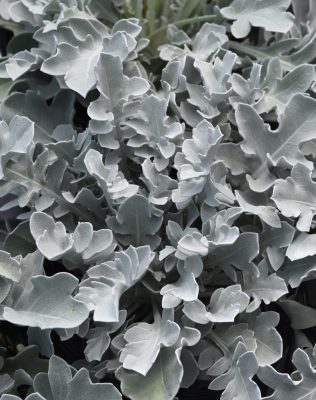 Centaurea ‘Silver Swirl’.
Low-maintenance perennial fillers
Perennials are a good choice for gardeners who want lasting colour without having to replace plants every season.
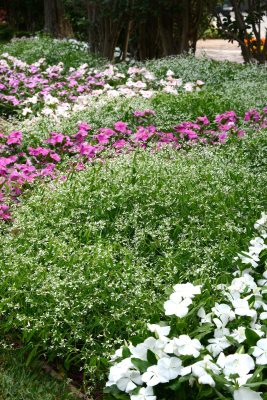 Euphorbia ‘Breathless.’
Euphorbia 'Breathless' and 'Flurry'
These fast-growing euphorbias produce a delicate cloud of white flowers that can spread through a garden bed, creating an effect similar to a flowering groundcover.
Both varieties are long-lasting, need little water and do not require deadheading. An occasional trim is enough to keep them looking tidy.
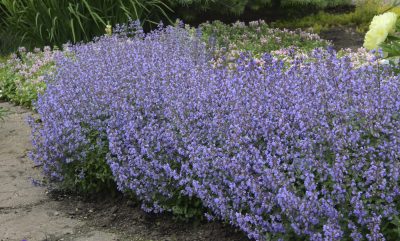 Nepeta ‘Purrsian Blue’.
Nepeta 'Purrsian Blue'
Also known as catmint, Nepeta 'Purrsian Blue' is a useful filler that can also hold its own as a feature plant.
It produces upright spikes of densely packed blue flowers with dark purple calyces during summer and autumn. Its aromatic, grey-green foliage adds further texture.
The plant can reach approximately 45cm in its first year, with its height and spread potentially doubling by the second year.
Plant it in full sun and well-drained soil. Once established, it is drought tolerant and attracts bees, making it particularly suitable for wildlife-friendly gardens.
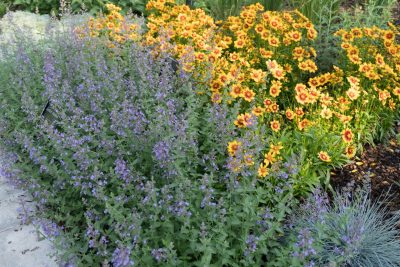 Coreopsis and catmint.
Coreopsis, gaillardia and rudbeckia
For a cheerful burst of colour, these daisy-like flowering perennials are hard to beat. Their yellow and golden blooms bring warmth to garden beds and attract pollinators.
All three are hardy, sun-loving plants that require relatively little care. They also multiply and can be divided to produce additional plants for filling empty spaces.
Coreopsis and gaillardia are generally lower-growing options, while gaillardia 'Mesa' has a slightly taller growth habit and can spread up to 55cm. Rudbeckia 'Denver Daisy' can reach approximately 65cm in height, with a spread of around 50cm.
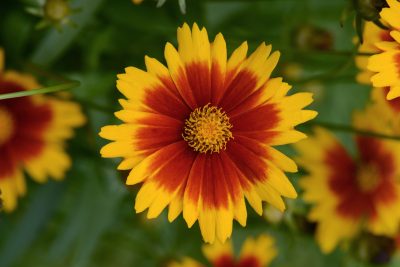 Coreopsis Uptick ‘Gold and Bronze.’
Coreopsis Uptick 'Gold and Bronze'
This variety adds a particularly striking colour combination, with a bronze-red centre contrasting against vivid golden-yellow flowers.
It is easy to grow, tolerates different soil conditions and has mildew-resistant foliage. Its flowers also attract pollinators, making it a practical and attractive choice for the garden.
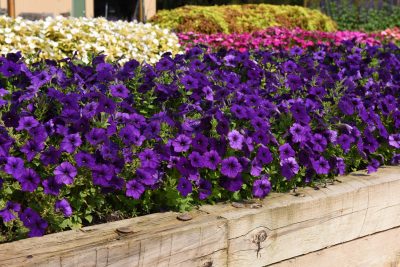 ‘Easy Wave’ petunia.
Easy-spreading annuals for summer colour
Annuals are ideal for gardeners who want to introduce plenty of colour during the warmer months. Although they need replacing at the end of their growing season, many grow quickly and provide an impressive display.
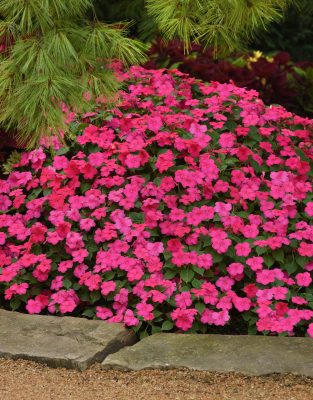
Easy Wave petunias
Petunias are popular bedding plants, but the Easy Wave varieties are particularly useful when covering larger spaces.
They can spread between 80cm and 1m per plant, meaning fewer plants may be needed to fill a garden bed. With basic care, they provide abundant colour throughout summer.
Impatiens 'Beacon'
For shady or semi-shady garden spaces, Impatiens 'Beacon' is worth considering.
It is a disease-resistant bedding variety that produces flowers from early summer until the first frost. It has a compact growth habit and is suited to well-composted soil.
Regular watering and monthly feeding with a liquid fertiliser will help keep plants healthy and flowering.
Verbena 'Firehouse'
Continuous-flowering verbena 'Firehouse' is another spreading summer annual that can bring lasting colour to garden beds. Along with Easy Wave petunias and Impatiens 'Beacon', it is a useful option for creating fuller, more colourful summer displays.
Make the most of your garden space
The secret to using filler plants successfully is to combine different foliage colours, textures, heights and flowering times.
Consider the amount of sun or shade each area receives, as well as the soil and watering requirements of individual plants. Group plants with similar needs together and allow enough room for spreading varieties to develop.
With a little planning, filler plants can transform bare patches into lush, colourful garden spaces while reducing the amount of time spent weeding and maintaining beds.
Content by www.ballstraathof.co.za
‘We bring you the latest Garden Route, Hessequa, Karoo news’