

Sponsored Content
BUSINESS NEWS - The United Progressive People Alliance (UPPA) has accepted the outcome of the Knysna local government election and says it will not treat the absence of a council seat as an absence from public life. Its post-election position is that the campaign has ended, but the work of building an organisation in Knysna has only begun.
The final result produced a 21-seat council with no outright majority. The DA secured nine seats, the ANC four and the Patriotic Alliance two, while the SACP, Freedom Front Plus, Knysna Civic Alliance, People's Movement for Change, Choose CX and the EFF each secured one.
UPPA received 533 votes on the proportional representation ballot and 453 votes across the ward ballot, but did not secure a seat.
The party's reading of that result is deliberately unsentimental. It did not receive a mandate to govern and says it will not pretend otherwise. At the same time, it argues that a party should not disappear from communities because it failed to cross the threshold for representation. It now wants to be judged by what it does between elections, whether it remains accessible to residents, whether it develops credible proposals and whether it can help move unresolved issues from complaint to action.
That means a change in method. UPPA says its Knysna operation will move from a campaign structure to a permanent local organisation, with ward structures, voting-district organisation and community contacts that can receive issues, record them, identify the responsible authority and follow them through.
Residents will be encouraged to bring service-delivery complaints, local development proposals and community concerns to the organisation, with feedback expected rather than a one-off promise that an issue has been “noted”.
A role outside
council: cooperate, monitor, organise UPPA says it intends to work with the administration that emerges from coalition negotiations, but on an issue-by-issue basis rather than through blanket opposition or automatic alignment. Where a municipal decision improves services, strengthens administration or advances a proposal the party believes is in the public interest, it says it will support the outcome. Where delivery falls short, it plans to use the municipality's own public processes, including IDP participation, budget submissions, petitions, information requests and formal oversight channels, to press for correction.
The important difference, according to the party, is that accountability will be tied to documents and deadlines. Knysna already publishes an Integrated Development Plan, an annual budget, a Service Delivery and Budget Implementation Plan (SDBIP), quarterly performance reports and in-year financial reports.
The municipality itself describes the SDBIP as a tool that converts the IDP and budget into measurable quarterly outputs and assists the community with oversight. UPPA says these documents will form the backbone of its monitoring work. 3,4
Instead of only asking whether a promise was made, the party wants its local structures to ask whether the project was budgeted for, whether procurement and implementation took place, whether the deadline moved, what was delivered and whether residents can see the result. It proposes public six-month and annual assessments of the areas it has identified as priorities, with ward-level evidence feeding into those reviews.
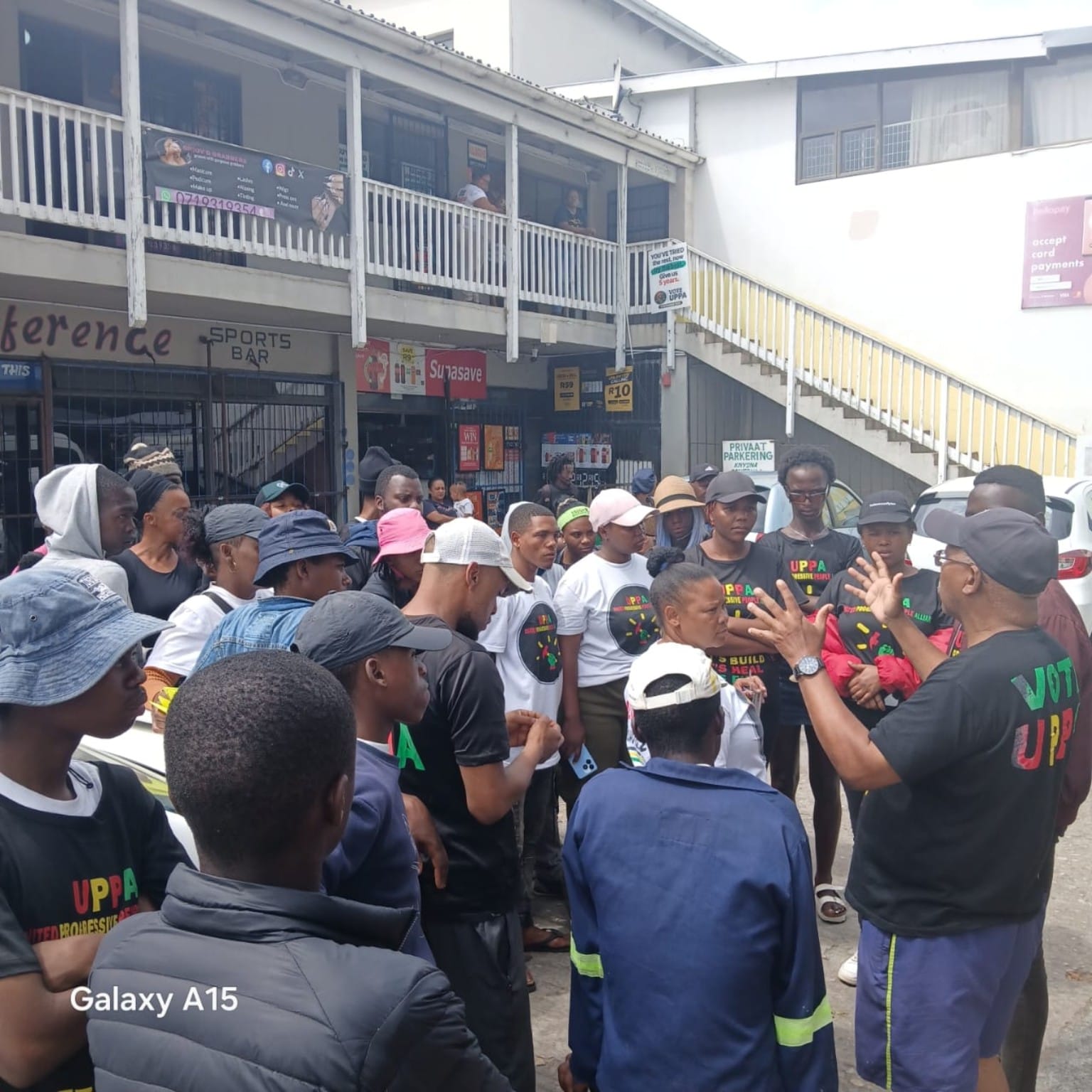 Young volunteers and supporters during a Knysna campaign briefing. UPPA says it intends to build a second layer of local leadership and organise beyond election periods. Image supplied by UPPA Knysna.
The party also wants to open a wider political conversation. It is inviting smaller parties, civic formations and other political organisations to engage it on ways to strengthen policy work, constituency service and issue-based representation.
UPPA says the invitation should not be read as an announcement of a merger or a coalition bloc. Its argument is that smaller formations should not be reduced to votes in coalition arithmetic when they can pool research, training and community experience on issues of common concern while retaining their own identity and independence.
For UPPA, that discussion is also about political capacity. A party with one seat, or no seat, can still help residents understand a budget, prepare a submission, track a road project, challenge a billing error or build a campaign around a failing service. The party says it is willing to share capacity and work with others where this can improve the quality of representation available to Knysna residents.
The first six months will set the tone
UPPA's first test for the incoming council is institutional stability. Knysna's municipal website currently lists Dr Richard Martin as Acting Municipal Manager and the Director of Financial Services and Chief Financial Officer post as vacant. 5 The party says critical senior appointments should be concluded within the first six months, subject to lawful recruitment processes, with competence, integrity and experience carrying more weight than political convenience.
It also wants the governing arrangement itself to be understandable to the public. If parties enter a coalition, UPPA says residents should know not only who occupies which office, but what programme the coalition has agreed to implement, what the priorities are for the first year and how progress will be measured. The election has again produced a council in which no party can govern alone, making the quality of the governing agreement as important as the arithmetic that produces it.
Water will be among the hardest tests. A June 2026 provincial parliamentary response put Knysna's non-revenue water at approximately 47.8% and described ageing infrastructure, mechanical failures, telemetry and SCADA problems, pump and reservoir instability, treatment failures and skills shortages. It also recorded inadequate water-quality compliance at the time of the assessment.
UPPA's pre-election programme proposed an intensive leak-repair programme and greater use of technical expertise, including experienced and retired engineers. 7 Outside government, the party says that proposal becomes a benchmark for advocacy rather than an executive promise. It wants a verified leak register, clear repair priorities, public reporting on water losses and closer scrutiny of the meter-replacement and pipe-replacement programmes already funded by the municipality.
The approach is not to deny work already under way. The approved 2026/27 budget increased capital expenditure to R249.3 million and allocated roughly 80% of that capital programme to electricity, roads, stormwater, water and sewerage. Funded projects include wastewater-treatment works, pump-station upgrades, CBD sewer work, water-pipe replacements and road rehabilitation. 8 UPPA says the question now is whether those allocations become functioning infrastructure on time and at the required standard.
Waste, roads and the cost of doing the basics
Waste management is another area where UPPA wants the incoming council to publish more usable information. Municipal planning documents acknowledge that transporting and disposing of waste at regional facilities outside.
Knysna, including Mossel Bay, creates significant financial and operational pressure. The draft 2026/27 budget referred to a planned R15 million capital contribution to the regional landfill arrangement, together with continuing transport and disposal costs.
The final budget also introduced a 25% refuse tariff increase. 9,8
The party is not presenting an uncosted alternative as an easy answer. It says the first task is to establish the full cost of the current system, including transport, disposal fees, fleet availability, transfer-station performance and the effect of downtime. From there it wants the municipality to compare recycling, diversion, beneficiation and other regional or local options on a like-for-like basis. If the existing model remains the most viable, UPPA says residents should be shown why. If better options exist, they should be developed into costed proposals rather than slogans.
Roads will be treated in the same way. The party wants public schedules that make it easier to distinguish emergency patching, routine maintenance and capital rehabilitation, particularly in communities where poor road conditions affect access, stormwater and basic mobility. Its own Ward 11 intervention during the campaign is presented as an example of practical involvement, not as a substitute for the municipality's statutory responsibility to maintain public infrastructure.
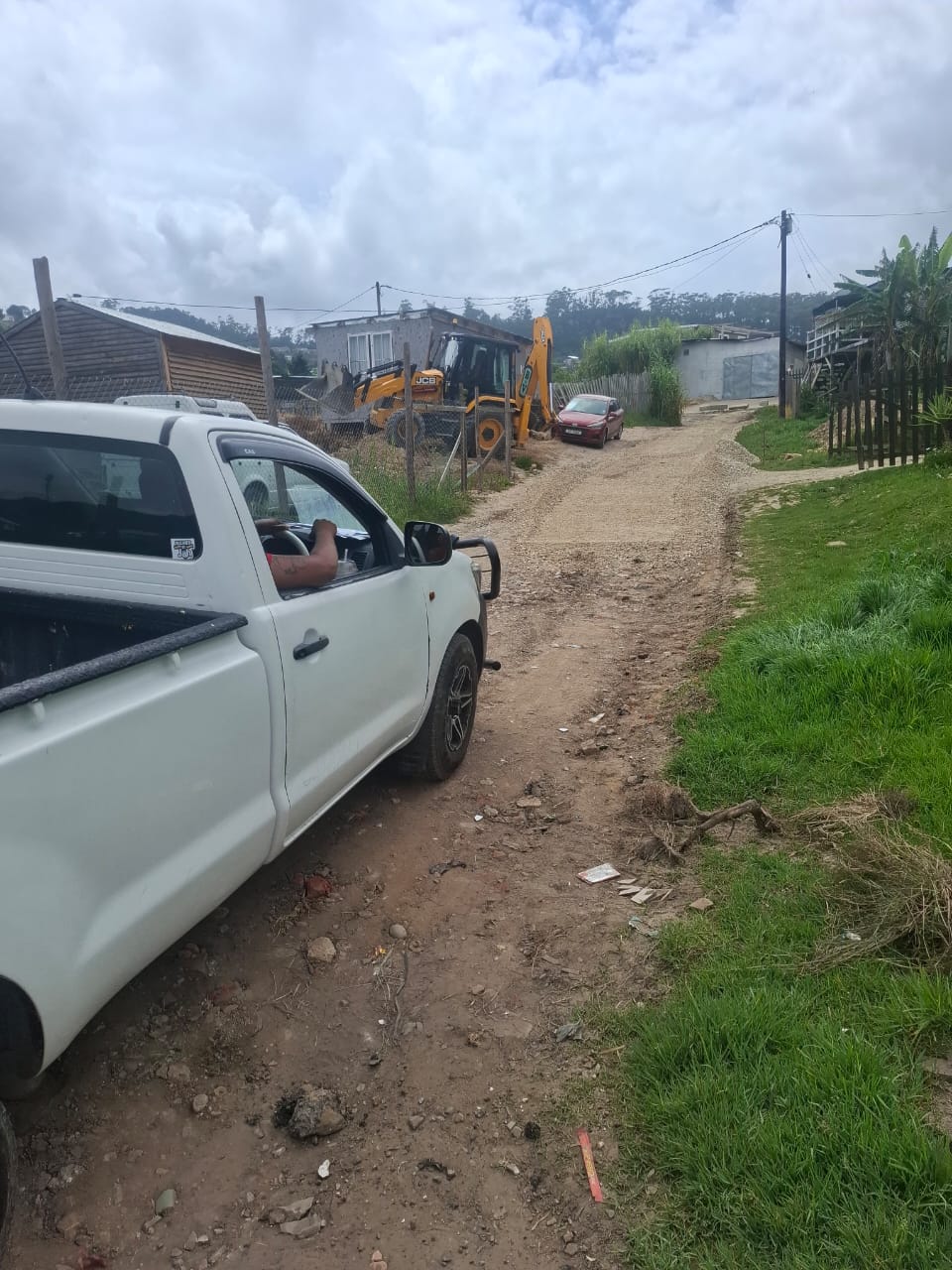 Road work in Ward 11 during the campaign period. UPPA says infrastructure advocacy after the election will focus on measurable project delivery, maintenance and follow-through rather than announcements alone. Image supplied by UPPA Knysna.
Housing, skills and an economy that reaches more households
Housing pressure is equally difficult to avoid. Knysna's approved 2026/27 IDP says the housing backlog is expected to exceed 12,000 units within the next decade, reflecting urbanisation, affordability constraints, limited land and growing vulnerability.
UPPA says its local structures will track housing-project pipelines, settlement-upgrading commitments, land decisions and emergency responses, while pressing provincial and national government where responsibility or funding sits outside the municipality.
On the economy, the party wants Knysna to use tourism as a platform for wider development rather than treating visitor numbers as an end in themselves. Its programme links tourism to local procurement, township businesses, events, arts and culture, food production, transport, construction and skills. It also wants more deliberate investment promotion, including projects that can be packaged for investors and partnerships that lower the barriers facing local enterprises.
Skills development is central to that approach. Knysna Municipality and South Cape College have already advanced plans for a TVET presence in the town, with municipal land earmarked for the project. 11 UPPA says it will support that development and advocate for programmes aligned to the local economy, including hospitality, engineering and artisan skills, agriculture, waste management, construction and technical services.
The party also wants to pursue study, research and city-to-city relationships with institutions abroad, including in China and other countries, where agreements can produce measurable skills transfer, technical exchange, tourism links or investment opportunities. UPPA says such partnerships should not become ceremonial trips or vague memoranda. Its preferred model would identify a local need, a partner institution, a defined programme, funding arrangements and a clear obligation to bring skills or investment back into Knysna. 7
Building leadership while keeping the door open
UPPA says the campaign revealed strong interest from young people, but it does not want its post-election organisation to become a youth structure detached from the rest of the community. It plans to build a second layer of leadership by combining the energy of younger activists with the experience of elders, professionals, workers, business people and long-standing community organisers. The stated objective is to produce people who can lead wards, understand municipal processes, organise community work and eventually carry public responsibility.
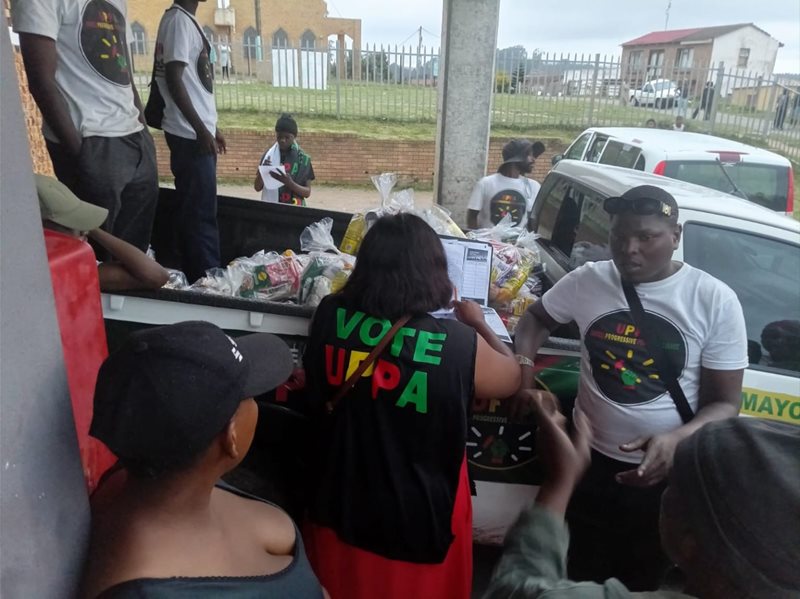
That is also how the party wants its earlier community interventions to evolve. During the campaign it reported food support, meals for learners, road work, rebuilding after a fire, sporting and cultural activity, church engagements and security-training opportunities. UPPA says those activities should not be confused with municipal service delivery. Their value after the election will depend on whether they help create lasting relationships, identify recurring problems and connect residents to institutions capable of delivering sustainable solutions.
There is a potential advantage in being outside the governing arrangement, but UPPA says that advantage only exists if it does the work. It is not bound to defend an administration, nor does it have the authority to issue instructions to municipal officials. That leaves it free to support good decisions, challenge poor ones and test both against the same public standard. The party says it will not oppose a proposal simply because another party introduced it, and it will not claim ownership if the municipality adopts an idea that improves residents' lives.
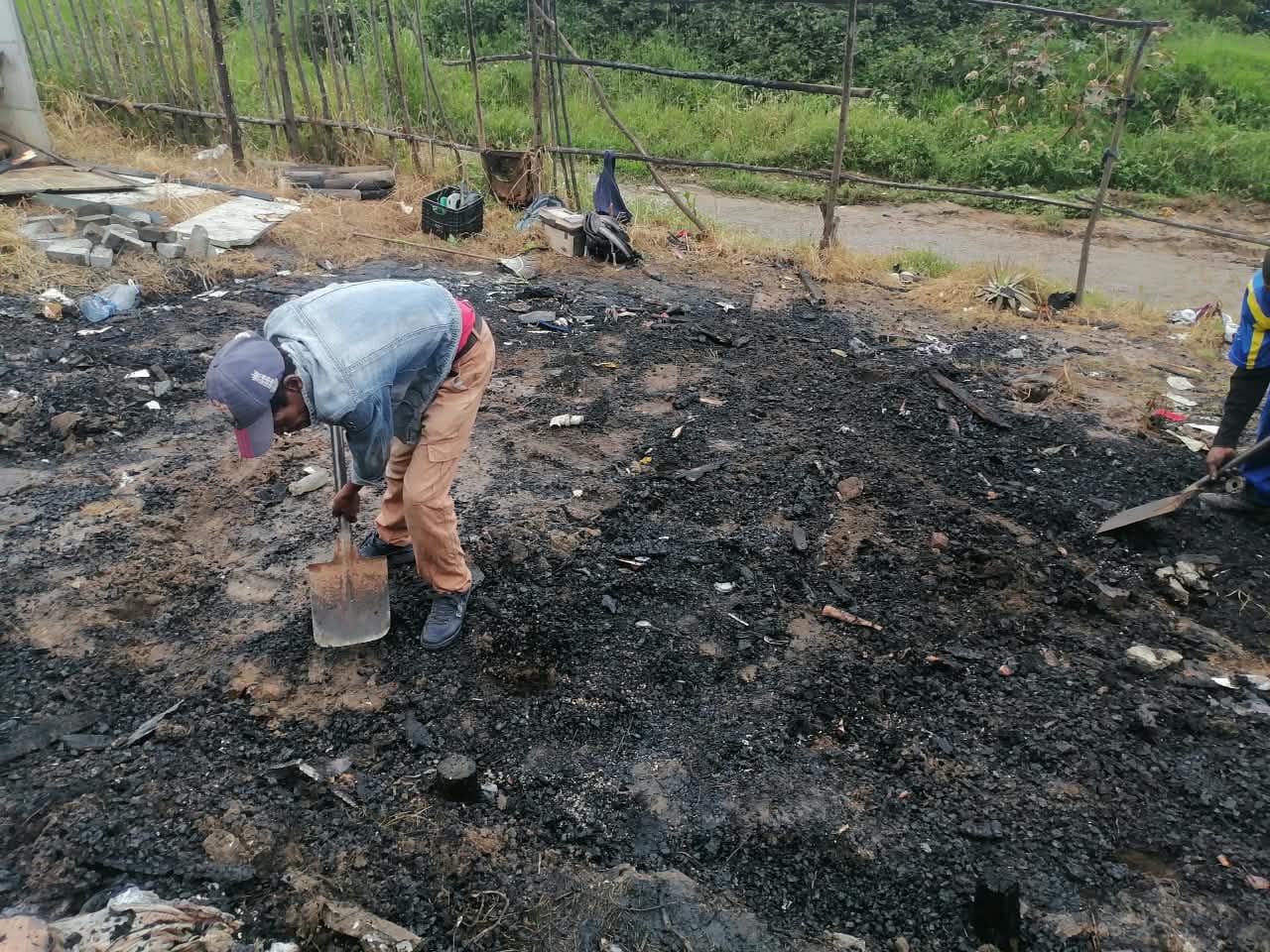 Ground work after a house fire during the campaign period. UPPA says its post-election structures will be expected to connect practical community work to sustained follow-through and public accountability. Image supplied by UPPA Knysna.
The five-year test
The result has therefore given UPPA a different kind of mandate from the one it sought. It is not a mandate to govern. It is a five-year test of whether the organisation can earn a larger place in Knysna by becoming useful, informed, disciplined and present.
Its proposed measure of success is practical: stronger structures in every ward; a resident casework system that follows issues rather than merely receiving them; regular scrutiny of the budget and SDBIP; public assessments of water, sanitation, waste, roads, housing and economic commitments; deeper youth and leadership development; and constructive working relationships with the council, other parties and civil society where interests align.
UPPA also intends to use Knysna as part of a wider effort to grow its presence in the Western Cape. It says that growth will have to be earned in the same way it now intends to build locally, through organisation between elections rather than visibility only during campaigns.
For residents, the party says the immediate message is simpler. Bring issues to the organisation. Find the local UPPA representatives as structures are established. Ask what has happened to a complaint after it was submitted. Expect feedback. Judge the organisation by whether it is still present when there is no ballot paper in sight.
UPPA has accepted the electorate's decision. The next question is what it does with the five years that follow.
Resident contact: UPPA Knysna WhatsApp 050 206 9016 | www.uppawillfixit.co.za
‘We bring you the latest Garden Route, Hessequa, Karoo news’