

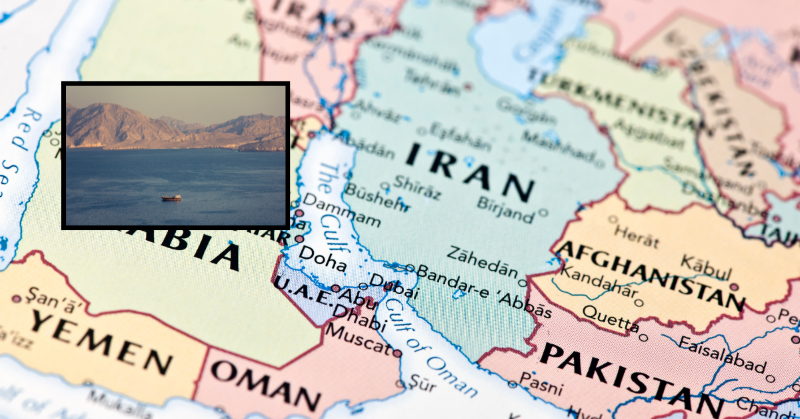
NATIONAL NEWS - The Strait of Hormuz, one of the world's most strategically important shipping routes, is set to be fully reopened from Friday after a deal between the United States and Iran hopefully brought an end to the recent conflict in the Middle East that disrupted maritime traffic through the vital waterway.
Speaking ahead of a G7 summit meeting with French President Emmanuel Macron on Monday, US President Donald Trump announced that the strait would be “completely open” following the agreement reached with Iran.
Vital shipping route returning to normal
The Strait of Hormuz serves as a critical passage for global energy supplies and international trade, connecting the Persian Gulf with the Gulf of Oman and the Arabian Sea. Recent hostilities in the region had resulted in restrictions on shipping movements through the narrow corridor, raising concerns about global supply chains and energy markets.
Trump said the waterway had already been partially reopened, although efforts were still underway to ensure safe navigation.
"The Strait is already partially opened," Trump said, adding that de-mining operations were continuing to remove potential hazards and ensure vessels could pass safely.
International cooperation discussed
The announcement comes after the United Kingdom and France proposed a joint naval mission aimed at helping to secure the route. However, Trump indicated that the United States was confident in its ability to maintain security in the area.
"I don't think we are going to need much help," he said when asked about the proposed European involvement.
Deal focuses on nuclear concerns
Trump described the agreement with Iran as a significant diplomatic achievement, stating that its primary objective was to ensure that Iran does not develop nuclear weapons.
"The main thing is Iran will not have a nuclear weapon," he said.
In contrast to Trump's upbeat statement, the nuclear issues are explicitly deferred to a subsequent 60-day negotiation period. There is no final resolution or detailed restrictions in the initial agreement.
New leadership in Tehran
Referring to developments within Iran's leadership following the death of Supreme Leader Ayatollah Ali Khamenei during the conflict that began on 28 February, Trump said the United States had established productive discussions with Iran's current leadership.
"The first set is gone, the second set is gone and we found the third set to be very smart. We ended up making a deal," Trump said, without specifying which individuals he was referring to.
Skepticism prevails
According to aljazeera.com many analysts, lawmakers, and industry figures remain deeply doubtful about the latest peace deal.
Critics point to the agreement's vagueness, differing interpretations between Washington and Tehran on key terms, unresolved core issues like Iran's nuclear programme and a history of fragile ceasefires that quickly collapsed.
Shipowners and energy experts are particularly cautious, warning that even after the formal signing expected in Geneva, practical hurdles - such as mine clearance, lingering security risks, insurance concerns and crew safety - could delay a full return to normal traffic for weeks.
Signing ceremony planned
Trump revealed that US Vice President JD Vance would attend a formal signing ceremony for the agreement on Friday, although he did not disclose the location where the event would take place.
He added that he believed the agreement would have far-reaching positive consequences for the region.
"I think a lot of great things are going to happen in the Middle East right now," he said.
The full reopening of the Strait of Hormuz is expected to provide reassurance to global shipping operators, energy markets and international traders who rely on the strategic route for the movement of goods and oil supplies.
This article was compiled with the help of Grok and Chat GPT.
‘We bring you the latest Garden Route, Hessequa, Karoo news’