

WESTERN CAPE NEWS - Rebuilding lost infrastructure in the Western Cape as a result of the destruction caused by the severe weather in May and early June will not only take years, but the R9bn required to do this substantially exceeds the available budget.
The entire Western Cape Government budget will have to be reprioritised to redirect funds for urgent repairs to and rebuilding of especially roads and bridges that have suffered extensive damage or are completely gone.
According to Finance Minister Deidre Baartman, the whole 2026 provincial infrastructure maintenance and capital budget amounts to R10b and financing the rebuild from this department alone will be impossible. She spoke during an online media briefing by Premier Alan Winde and Cabinet members as well as officials this morning, Thursday 18 June.
Both the 5-8 May and 10-13 May weather events have been classified as national disasters, but Baartman said disaster funding from National Government is retrospective and the legal process in obtaining it takes “longer than what we wish for at this moment”.
According to the Western Cape Deputy Director General for infrastructure, Louise Buys, if additional funding from National Government is not forthcoming, resources will need to be diverted from planned maintenance and capital projects. “This will result in further deterioration of the broader road network and a growing maintenance backlog.”
Winde said the province will have to make “big” and “hard” decisions regarding where to apply funding. The scale of damage and cost of the devastation have never been seen in the province before.
“In the previous floods, the roads claim was nearly R1b and the province was allocated R300m. Currently, Cogta [the Department of Cooperative Governance and Traditional Affairs] has around R600m in their account for disasters and the Western Cape is not the only province with disasters.” The premier said that there is no clear timeline as to when disaster funds would become available.
Louise Buys, deputy director general of the Western Cape Infrastructure Department, said the preliminary roads infrastructure damage amounts to about R2b. About 70% of the more than 230 roads closed during the storms have since been reopened in some form thanks to emergency response and restoration efforts.
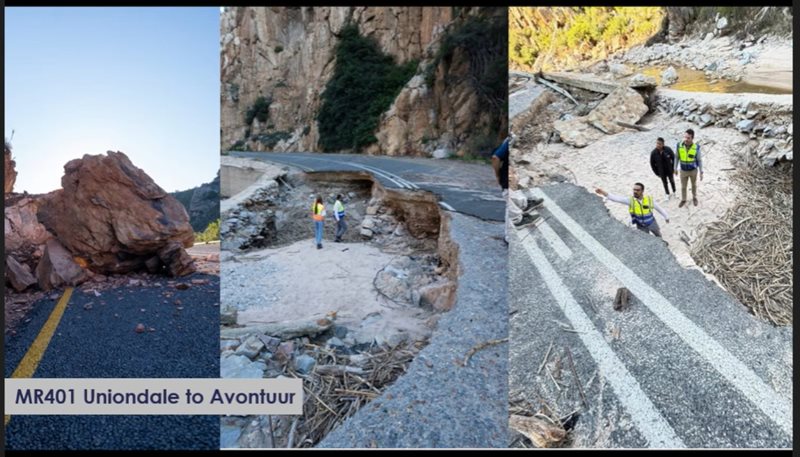
Several communities remain vulnerable because of roads and bridges that have washed away or are impassable due to massive rock falls.
Buys said for longer-term recovery, 19 emergency repair projects have been identified at critical locations with contractors already mobilised and works started on a number of these projects. Many roads and structures in the road network require major repairs or reconstruction and priority will be given to critical economic and strategic routes, routes with no or lengthy detours and high-volume traffic routes. Projects will be phased, subject to available funding.
The agricultural sector has also suffered massive losses. Western Cape Agriculture Minister, Ivan Meyer, said 680 farmers have to date reported storm damage to the tune of over R8.5b. Losses reported include R2b in crops, R6.4b in infrastructure and R50m in livestock. The figures are expected to rise as the water subsides.
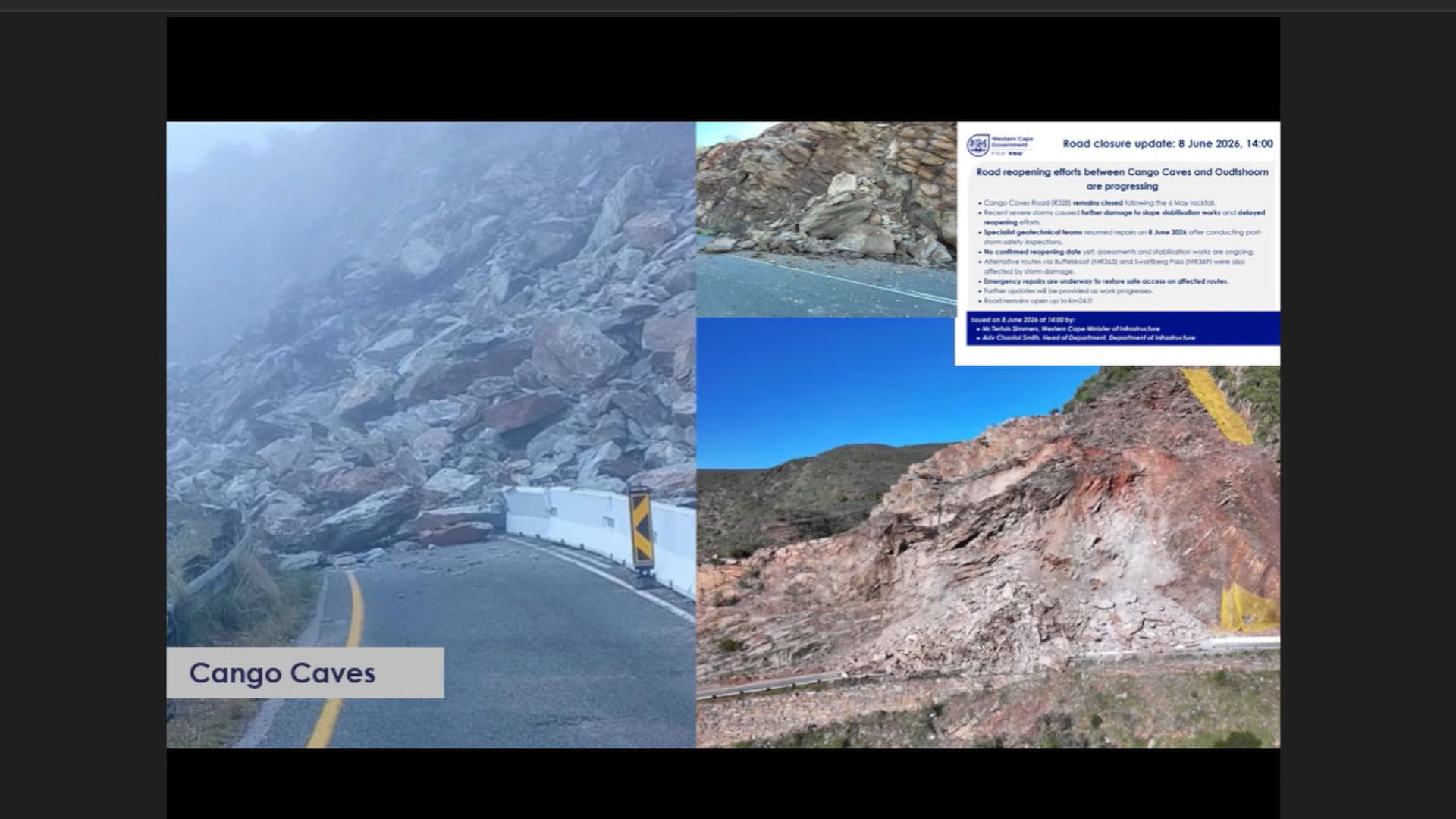 It is uncertain when the road between the Cango Caves and Oudtshoorn will reopen after a massive rockfall occurred during the storms. Screen shot of photos displayed.
The Minister of Local Government, Environmental Affairs and Development Planning, Anton Bredell, said planning for future severe weather events is essential. The impact of the storms was less severe in municipalities that adhered to winter readiness programmes. “So improving management of stormwater and alien vegetation programmes is necessary.”
He said implementing coastal and river setback lines is essential to plan for the impact of climate change and to protect infrastructure. Recurring damage can be avoided through technology and planning. “Rebuilding better” to be climate resilient costs three times more, but will save money in the long term.
Winde said communities affected by the flood damage are eager for a return to normality, but warned that many infrastructure repairs will take months or even years to complete.
In some areas school buses now have to travel an additional 80km to 100km because bridges have been washed away, despite schools being visible on the opposite side of a river.
There are no quick fixes, as damaged structures must be rebuilt safely and according to engineering requirements. The province wants to ensure that new infrastructure is more resilient to future climate-related disasters.
Winde referred to the reconstruction of the Citrusdal bridge as an example of the province's “build back better” approach. Although the project cost three times more than conventional repairs, the upgraded infrastructure withstood this year’s one-in-200-year flood event, which demonstrates the value of investing in climate-resilient solutions.
Repairing and rebuilding Meiringspoort could take up to 26 months. It is also not certain when the road between the Cango Caves and Oudtshoorn will be reopened.
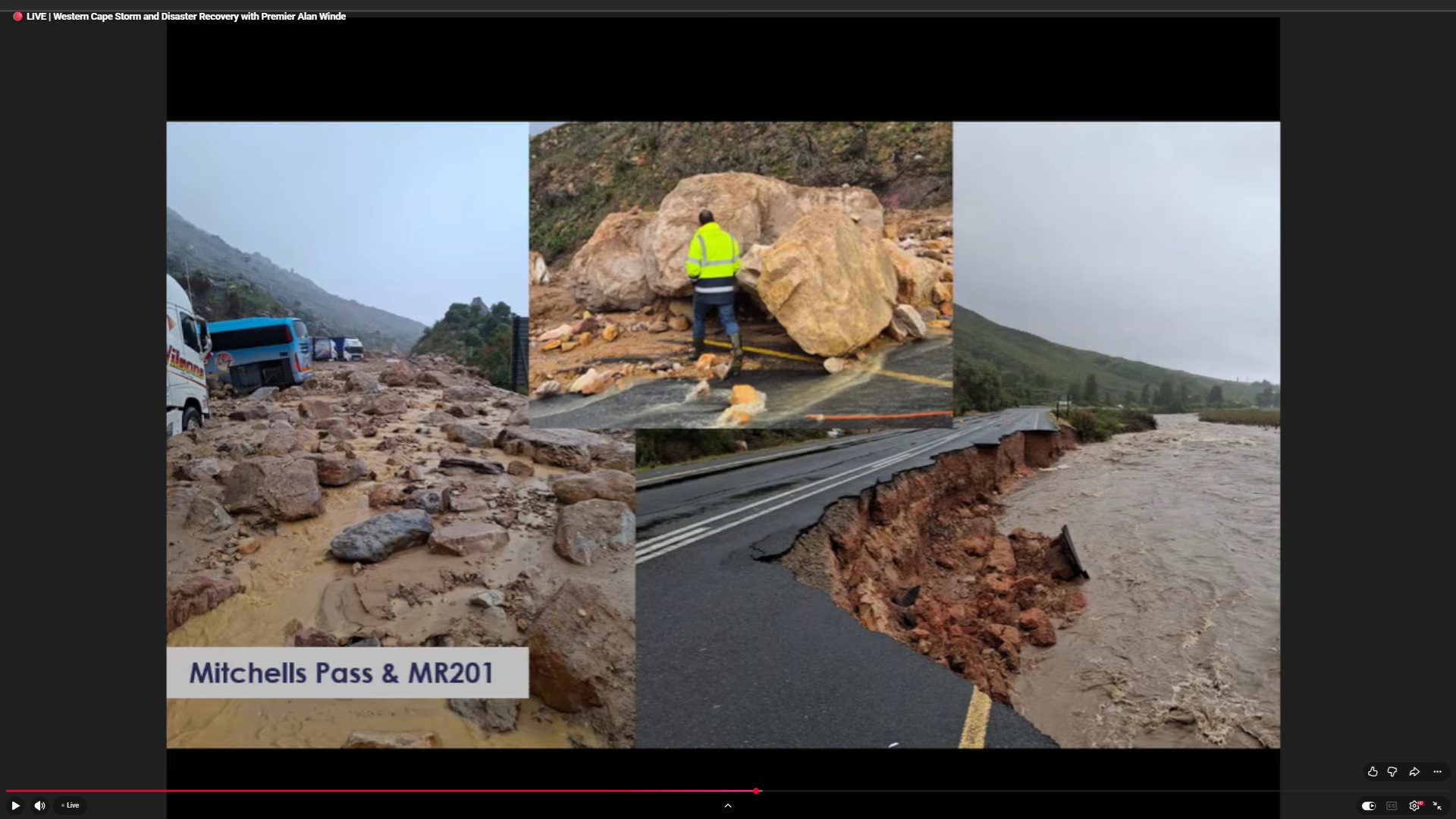 Damage to Mitchell's Pass. Screen shot of photos displayed.
‘We bring you the latest Garden Route, Hessequa, Karoo news’