

Update
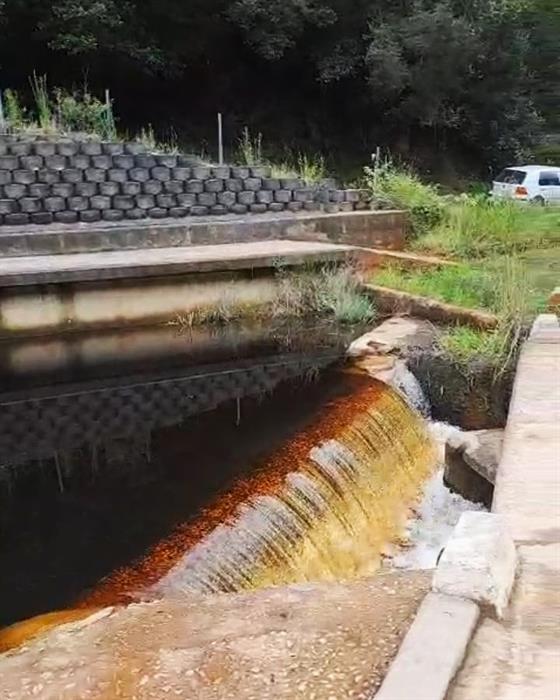
KNYSNA NEWS - Although greater Knysna experienced some relief following rainfall yesterday and the sight of water flowing over the Gouna River weir, the amount received is unfortunately insufficient to remove the municipality from disaster conditions.
As a result, the Knysna Council has declared the greater Knysna municipal area a local disaster area in terms of the Disaster Management Act, Act 57 of 2002.
Council decision enables emergency intervention
Knysna Executive Mayor, Thando Matika, confirmed that the declaration was approved during a special Council meeting held today, Friday 16 January.
"This decision allows for urgent provincial and national interventions," said Matika. "It also empowers the Mayor to authorise unforeseen and unavoidable expenditure in emergency circumstances where no provision exists in the approved budget."
Disaster management structures activated
Matika said the water emergency will be managed in accordance with the Knysna Municipality Disaster Management Plan.
The Garden Route District Disaster Management Centre, in consultation with the Knysna Local Disaster Management Unit, will coordinate short- and medium-term interventions required to address the crisis.
The Western Cape Department of Agriculture will also be requested to conduct an urgent assessment of the drought’s impact on agricultural areas within the municipal boundaries.
Water augmentation programme accelerated
The municipality, together with provincial and national government partners, is implementing a comprehensive water augmentation programme aimed at increasing supply.
"Specialist teams from provincial government and the private sector have completed geohydrological assessments and engineering studies to ensure that all interventions are effective, sustainable and environmentally responsible," Matika said.
Augmentation projects nearing completion
Several water augmentation projects are already underway and are expected to be operational within the next two weeks.
These include the development of the Bigai and Bongani springs, as well as the refurbishment of seven existing boreholes, collectively expected to deliver approximately 3,2 megalitres of water per day.
A further seven new boreholes will be drilled, with an anticipated yield of an additional 2,7 megalitres per day. Additional augmentation options are currently being investigated.
Private sector support strengthens supply
Matika confirmed that the municipality is concluding an agreement with PG Bison, which has offered access to additional boreholes with an estimated yield of approximately 3 megalitres of water per day."When all current augmentation initiatives are fully implemented, the total expected additional potable water supply will be in the region of 11 megalitres per day," he said.
Funding applications submitted
The total cost of the emergency water interventions is estimated at R58 million, underscoring the scale and urgency of the disaster. Declaring a local disaster enables the municipality to access potential financial assistance from provincial and national government.A funding application was submitted to the Department of Water and Sanitation on 14 January, and final feedback is currently pending.
Day zero drawing closer
"These interventions are critical for securing water supply in the short to medium term," Matika said. "However, we must acknowledge that Day Zero is approaching."
He emphasised that the only way to postpone or avoid Day Zero is through immediate and drastic reductions in water consumption.
"Day Zero does not mean Knysna will run out of water entirely," he explained. "It means the reticulation system will be shut down to prevent total system collapse, and residents will have to queue daily for personal water rations."
Dam levels at a critical stage
Akkerkloof Dam, the municipality’s primary off-channel bulk water storage facility, is currently at approximately 15% capacity. At current abstraction and consumption rates, this equates to roughly ten days of water remaining in the bulk supply system.Water supply is supplemented through continued abstraction from the Glebe Dam, which currently stands at around 60% capacity, equating to approximately six days’ supply, as well as contributions from the Bigai spring and existing boreholes.
While around 50mm of rainfall was recorded, this has already been factored into water supply calculations and remains insufficient to resolve the crisis.
Demand reduction and infrastructure response
Municipal initiatives to reduce water demand include reconnecting approximately 8,000 bypassed water meters to ensure accurate measurement of consumption.Level 4 water restrictions will be communicated, monitored and intensified, with flow restrictors installed where non-compliance is identified.
To address water losses caused by pipe bursts and aging infrastructure, the municipality has appointed additional temporary plumbing teams, including five plumbers, six water meter installers and 30 general assistants. This is expected to reduce response times to major pipe bursts to between four and six hours.
Call for public cooperation
“We continue to work on maintaining and improving our infrastructure,” Matika concluded. “However, water is a limited resource, and residents must urgently reduce consumption.The choices we make now will determine whether we avoid Day Zero or face daily water rationing. Collective action is essential.
Read previous articles:
- Rain brings brief relief for Knysna
- Knysna races to avert day zero
- No water cut-offs in Knysna yet as crisis unfolds
- Joint site visits Strengthen Knysna's water supply
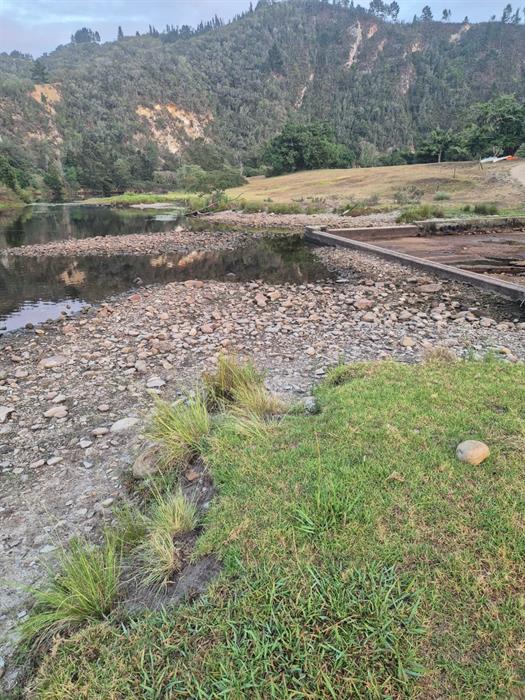 Knysna River Pumping Station area prior to rainfall. This picture was taken on 10 January. Photo: Supplied
 Knysna River Pumping Station yesterday evening Thursday 15 January at 19:40. Photo: Supplied
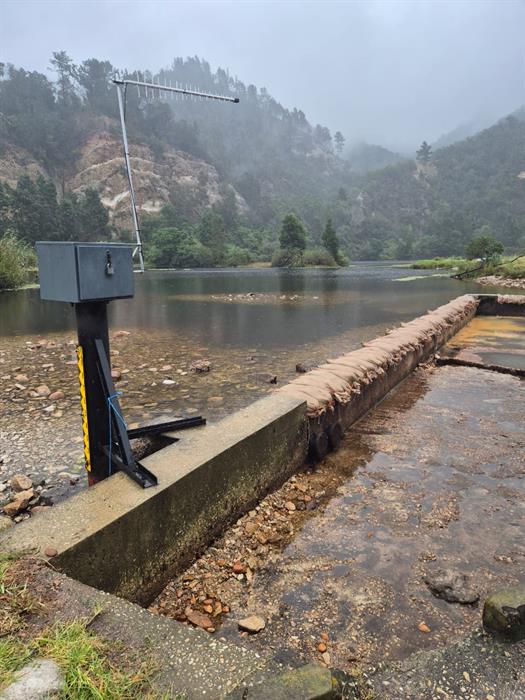 Knysna River Pumping Station yesterday 15 January at 17:00. Photo: Supplied
 Water making its way downstream from Gouna River enroute Charlesford. Photo: Supplied
‘We bring you the latest Garden Route, Hessequa, Karoo news’