

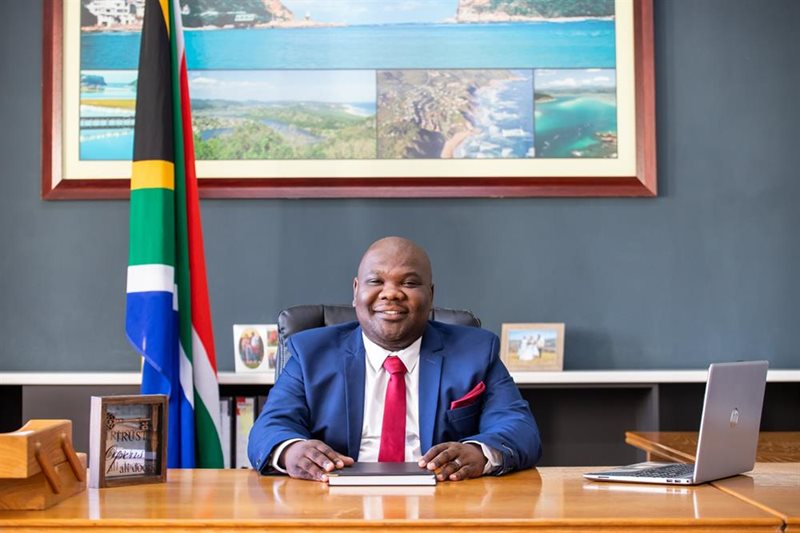
KNYSNA NEWS - "But first, we review our progress 'brick by brick', acknowledging both the foundations we have laid and the significant hurdles that remain," Mayor Thando Matika told Council on Friday 29 May. "We stand at a critical moment that calls for decisive action and unwavering dedication to restoring Knysna as the 'Jewel of the Garden Route'."
Moments later, Council approved a R1.527b operating budget and R249.3m capital budget for Knysna Municipality for the 2026/27 financial year.
The budget was passed with support from the ANC-led coalition partners, while the Democratic Alliance (DA) voted against it citing affordability concerns, rising debt exposure, and what it called unrealistic financial assumptions.
Budget adopted despite opposition vote
The special council meeting highlighted sharp political divisions over the municipality's financial direction.
The DA caucus rejected the budget, arguing that key supporting documents were incomplete and that several statutory requirements had not been met.
"We could not support certain documents, allocations, and projections that we believe are flawed, unrealistic, and fail to address the municipality's most pressing challenges. Eight mandatory policies are also missing," said DA Caucus Leader Levael Davis.
While the DA acknowledged indigent relief measures, it criticised steep tariff increases. Electricity tariffs will rise by 11.5%, water by 12%, and refuse removal by 25%, raising concerns about affordability for households already under pressure.
Water losses and service delivery concerns
Davis said the tariff hikes come amid worsening infrastructure failures. "Water losses have climbed beyond 47%, driven by leaks, illegal connections and faulty meters," he said. "Residents are being asked to pay more without visible improvements in service delivery."
He added that a previously planned R40m intervention for water metering upgrades did not materialise, leaving the same systemic issues unresolved in the new budget cycle.
R99m new debt and environmental liability risk
The 2026/27 budget includes new borrowing of R99.4m, with additional debt planned over the medium term. Davis said provincial authorities are reviewing Knysna's capacity to sustain further borrowing. Outstanding municipal debt now exceeds R608m.
The municipality also faces a potential environmental liability exceeding R600m linked to sewage spills, pollution, and waste management failures affecting the estuary and surrounding water systems.
"This funding must be directed toward infrastructure rehabilitation and compliance. There is no clear implementation plan," Davis said.
Mayor defends audit gains amid fiscal pressure
Matika defended the municipality's financial position, highlighting its unqualified audit opinion for the 2023/24 financial year. "While the audit reflects strengthened compliance and financial management, it also highlights areas requiring continued improvement," he said.
However, he acknowledged a steep decline in financial performance.
Section 71 reports show the projected surplus dropping from R234.7m to R14.4m within six months of the 2025/26 financial year, largely due to asset depreciation and infrastructure ageing.
Personnel costs remain at approximately R379m, or 25% of operating expenditure, within National Treasury benchmarks.
DA challenges surplus and grant dependence
The DA questioned the credibility of the projected R42m surplus, arguing it depends on capital grants being treated as operational revenue.
"Excluding grants, the municipality is effectively running an R11.4m deficit," Davis said. Grant funding has declined from R239m to R219m due to underspending and delayed rollovers. Although the capital budget has increased, a significant portion is financed through borrowing, raising sustainability concerns.
Capital budget prioritises infrastructure renewal
Among the major allocations are:
- R30m for the Knysna networks pump station upgrade
- R15m for wastewater treatment works refurbishment
- R11.6m for the CBD sewer pump station upgrade
- R10m for AC pipe replacement
- R8m for the Khayalethu sewer project
- R19m for the upgrading of gravel roads
- R10m for the greater Knysna network upgrade
- R9m for street resealing projects
- R27m for housing construction
- R10.7m for the Sedgefield housing project.
Additional funding has been allocated for electricity infrastructure upgrades, public safety initiatives, waste management improvements and network upgrades across the municipality.
"Recycled funding is not progress" - DA
Davis said the mayor's progress claims were not supported by evidence of delivery.
"The grants listed for housing and roads are recurring provincial allocations that were reduced or rolled over due to underspending. Presenting them as achievements is misleading," he said.
"Knysna needs a realistic, transparent, and sustainable budget that addresses service delivery failures. The DA will continue to hold the administration accountable despite the budget's approval."
‘We bring you the latest Garden Route, Hessequa, Karoo news’