

GARDEN ROUTE | KAROO NEWS - On 9 August 1956, about 20 000 women marched to the Union Buildings in Pretoria to protest apartheid pass laws, leaving behind the powerful message: wathint’ abafazi, wathint’ imbokodo - “you strike a woman, you strike a rock”.
Seventy years later, that image of women as pillars of resilience is finding new meaning across South Africa’s communal rangelands, where women are emerging as leaders in agriculture, conservation and sustainable land management.
At the centre of this transformation is Meat Naturally Africa (MNA), a farmer-owned social enterprise that has spent the past decade proving that rural women are not simply participants in conservation - they are key drivers of its success.
A conservation vision rooted in communities
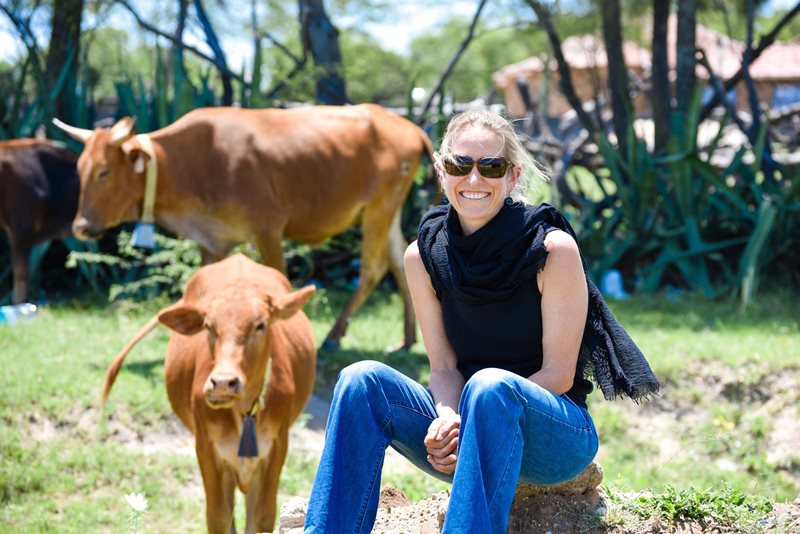
The organisation was founded by Sarah Frazee, whose career in conservation took her across Indonesia, the Philippines, Madagascar and South Africa before she completed a Master’s degree at the University of Cape Town.
Frazee later led Conservation International’s South African programme, which became the independent NGO Conservation South Africa in 2010.
It was through this work that she identified a major challenge: much of South Africa’s biodiversity exists outside formally protected areas, on land where communities live and farm.
“Eighty percent of our biodiversity sits outside formally protected areas, on land that people are farming and living on every day,” Frazee explains.
“If conservation only speaks to game reserves and national parks, it will always miss critical places South Africa’s wildlife needs to survive.”
This realisation led to the development of a model that places livestock farming at the centre of conservation.
Rewarding farmers for protecting the land
In 2013, Frazee began developing the concept alongside Guy Deacon, currently MNA’s technical director, and colleague Gerbrand Nel.
Three years later, Meat Naturally Africa was formally established with a simple goal: connect communal farmers to formal markets while encouraging better grazing practices, fire management and land stewardship.
Since then, the organisation has:
- Facilitated more than R134 million in livestock sales.
- Worked with more than 10 000 communal farmers.
- Helped restore hundreds of thousands of hectares of communal rangeland.
In 2026, MNA also achieved a global milestone when a partner carbon project became the first in the world to issue carbon credits carrying both Verra’s VM0042 methodology and the Climate, Community and Biodiversity label.
Women at the heart of conservation success
Behind the impressive figures is a growing network of women taking leadership roles in rural agriculture.
Within the GRASS carbon programme, women represent 35% of registered livestock farmers, contributing to decisions around grazing plans, livestock health and land management.
Of approximately 600 herders being trained in long-term rangeland management careers, nearly one-third are women - a significant shift in a sector historically dominated by men.
Frazee says this change reflects the important role women already play in caring for households, communities and natural resources.
“Women are often expressing their concern about what the land will look like for their children and grandchildren,” she says.
“That instinct makes them natural stewards of regenerative agriculture.”
Women creating opportunities through wool
MNA’s wool initiative, Fleece Naturally Africa, has further expanded opportunities for women in rural communities.
Women make up around half of the programme’s participating farmers, receiving support through mobile shearing services and training in wool grading, spinning and felting.
The initiative aims to ensure more value remains within communities instead of being lost to external middlemen.
Women leading wildfire awareness
Since 2025, the Women in Wool Against Wildfire initiative has trained 44 women and young people across nine communities to become fire-awareness champions.
The programme equips participants to educate schools and communities about fire prevention while improving their knowledge of wool production and pricing.
The approach recognises the important role women often play as caregivers and community influencers, making them well positioned to help reduce veld fire risks.
Participants receive practical incentives as well as recognition as community leaders.
Building the next generation of conservation leaders
MNA’s work extends beyond livestock and wool.
In the Kruger National Park buffer zone, visitors can purchase meat from MN Kruger Meats, supporting local farmers while contributing meat donations to an early childhood development school bordering the park.
Youth programmes are also expanding opportunities, including the three-year EcoRanger Apprenticeship, which provides training in grazing coordination, livestock monitoring and fire management.
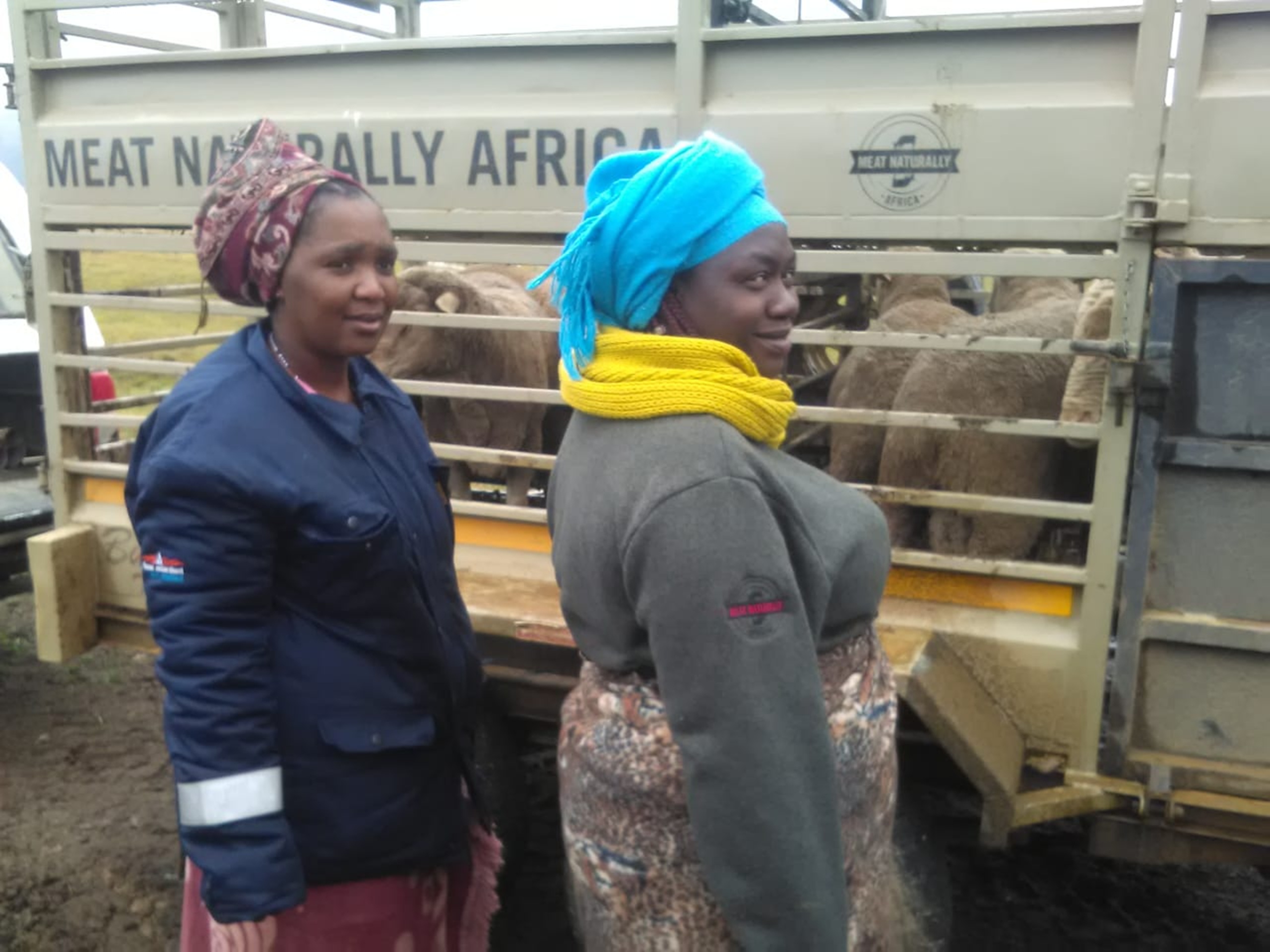 Meat Naturally Africa has spent a decade proving that rural women are not bystanders in conservation and agriculture but rather its backbone.
Breaking barriers in male-dominated industries
Frazee acknowledges that building the organisation has not always been easy, particularly as a woman working in traditionally male-dominated sectors.
“In the early years it was often hard to be taken seriously,” she says.
However, she believes this also allowed her to challenge assumptions and build a leadership approach based on trust.
“I found I could lead through building trust and support rather than authority, and that has worked far better with communal farmers than any top-down approach ever could.”
A vision for Africa’s future
Today, Meat Naturally Africa operates across 180 communities and approximately 580 000 hectares of communal rangeland.
The organisation aims to expand to one million hectares in South Africa by 2028 and five million hectares across Africa by 2030.
For Frazee, National Women’s Day is not only about recognising past achievements, but also about creating space for more women to lead the future of agriculture and conservation.
“I’d love to see more women in this sector finding the links between livestock, land and the wellbeing of their households and communities,” she says.
“This is where women can lead better than anyone.”
‘We bring you the latest Garden Route, Hessequa, Karoo news’