


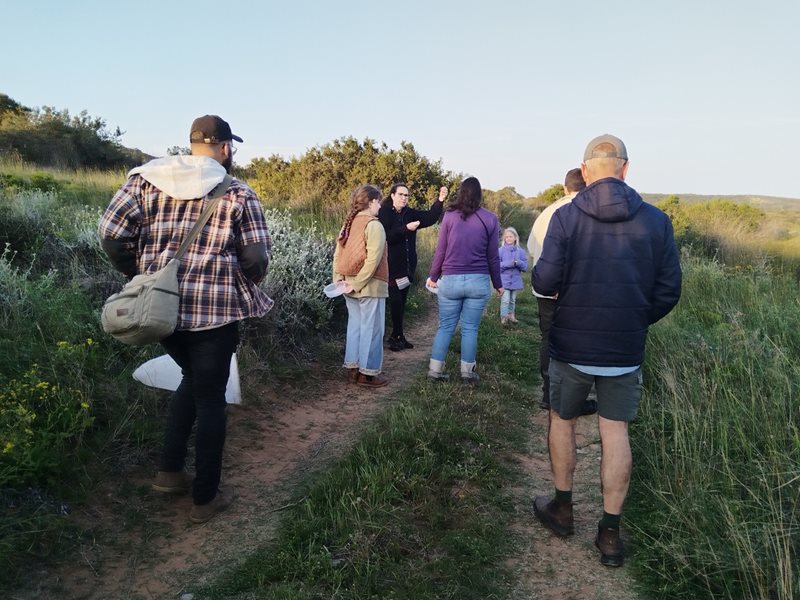
ENVIRONMENT NEWS - For most people, awareness of the natural world stops somewhere around knee height. But look closer - beneath leaves, among flowers and bark, around ponds, through reeds and across fynbos - and an extraordinary world comes into view.
Millions of tiny lives are constantly at work, pollinating plants, recycling nutrients, breaking down organic matter, providing food for other animals and forming complex relationships with the plants around them.
Yet insects remain among the least appreciated and understood inhabitants of the natural world.
That hidden world came into focus at Wild Rescue nature reserve during Biodiversity Month, when visitors gathered on 19 September for a special event dedicated to two fascinating groups: beetles and moths.
The event brought together two leading South African specialists. Entomologist and researcher Handré (Renier) Basson, Senior Field Officer for the Endangered Wildlife Trust’s Drylands Conservation Programme, operating via Stellenbosch University, explored the remarkable world of beetles and their role in ecosystems.
Renowned lepidopterist and author Hermann Staude, known for Southern African Moths & their Caterpillars, introduced visitors to the extraordinary diversity of moths and their relationships with plants.
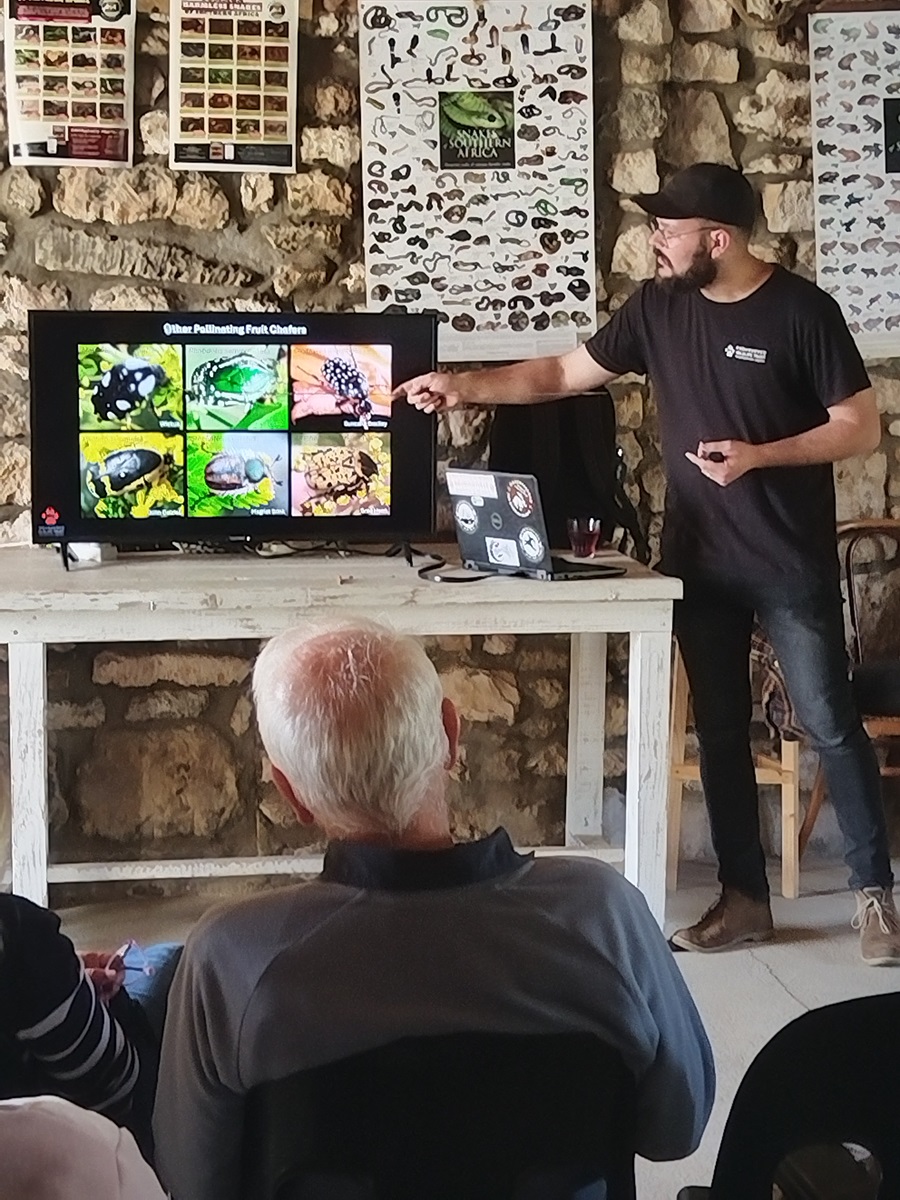
Renowned lepidopterist and author Hermann Staude, known for Southern African Moths & their Caterpillars, introduced visitors to the extraordinary diversity of moths and their relationships with plants.
The presentations were followed by afternoon and nighttime field trips, allowing participants to experience these often-overlooked creatures in their natural environment.
Ancient partnerships
Insects are the most diverse group of animals on Earth. About one million species have been formally described, while estimates of the true number range into the millions.
South Africa is particularly rich in insect diversity. Over millions of years, insects and plants have evolved alongside one another, creating intricate ecological relationships.
Some of the region’s living lineages can be traced back to the Gondwana era, while parts of southern Africa escaped some of the impacts experienced elsewhere during past ice ages.
The result is an extraordinary network of relationships between plants, insects and the wider ecosystem.
Beetles are also among the oldest groups of flower visitors and pollinators, with evidence of beetle pollination dating back more than 200 million years.
The night shift: Moths
Then there are the moths.
Staude highlighted the remarkable diversity of this group, pointing out that butterflies are, scientifically speaking, a specialised branch of the broader moth lineage.
There are roughly 160,000 known moth species worldwide, making them an enormous component of global biodiversity.
Many moths play important roles as pollinators, with some plants relying on particular insect species for reproduction. Moths also form an important part of food webs, providing sustenance for birds, bats and other animals.
Their importance extends beyond what happens at night. Their caterpillars interact with plants, while adult moths contribute to pollination and nutrient cycles.
The message from the event was clear: restoring and rewilding ecosystems cannot be separated from protecting the insects that help those ecosystems function.
Disappearing before we get to know them
Both speakers highlighted concerns about insects whose populations and habitats are already under pressure.
Some beetle species, for example, are becoming increasingly isolated as a warming climate changes the environments in which they can survive. As suitable habitat shrinks, species with restricted ranges can become particularly vulnerable.
Yet understanding these changes is difficult when so little is known about many insect species.
A lack of funding for entomology and lepidopterology in South Africa remains a challenge, while much of the specialist research is undertaken by a relatively small scientific community, including researchers from outside the country.
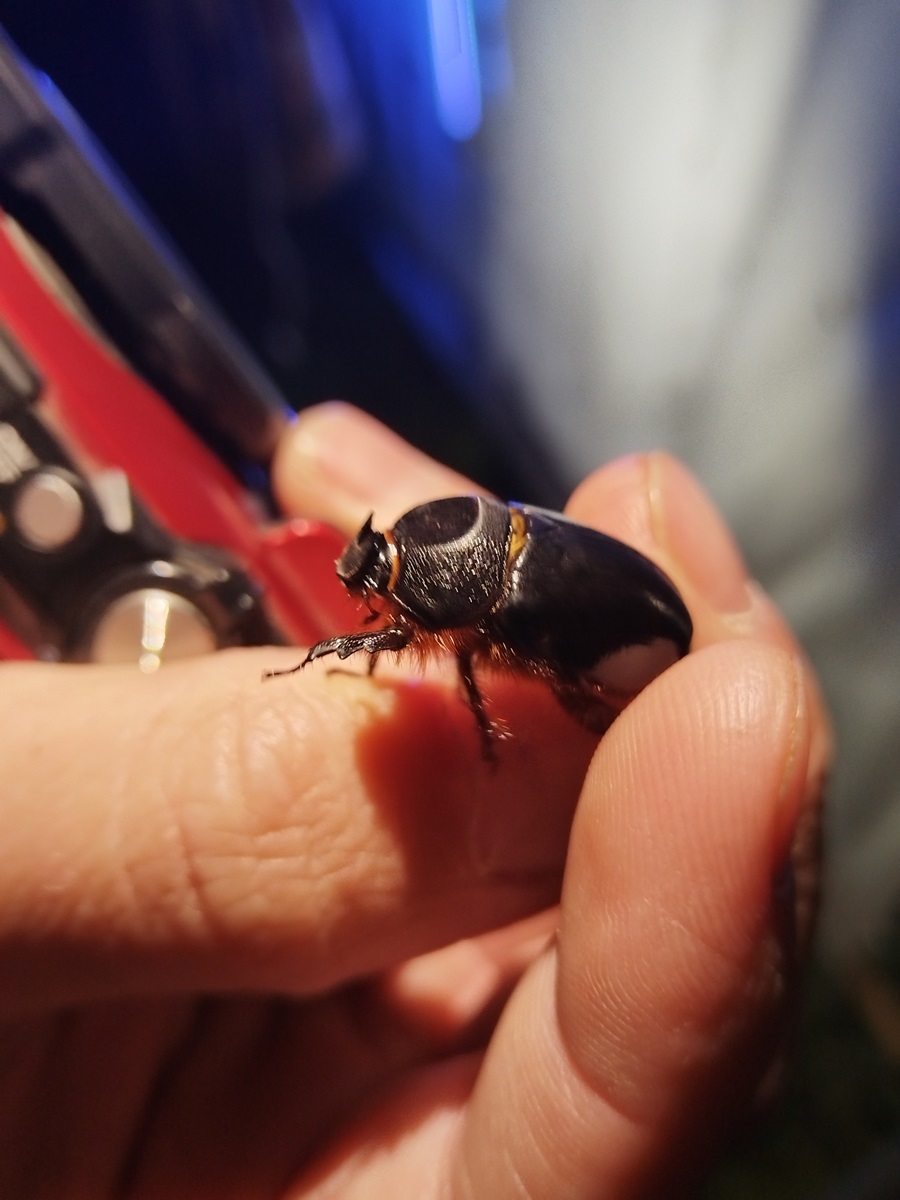 Some beetle species are becoming increasingly isolated as a warming climate changes the environments in which they can survive.
Without information about where a species occurs, it becomes difficult to assess whether its range is shrinking. Without population data, declines can be difficult to measure. And without understanding the relationships between species and their habitats, conservation planning becomes more challenging.
Every species lost represents not only the loss of an organism, but the loss of an evolutionary history that may have taken millions of years to develop.
Small changes can make a big difference
Much of the harm to insects can be unintended.
Artificial light is one example. Vehicles travelling at night, garden lighting, swimming-pool lights and other sources of artificial illumination can interfere with insects that navigate using natural light sources.
Reducing unnecessary outdoor lighting, switching lights off when they are not needed or using motion sensors can therefore make a difference.
Gardens and other urban spaces can also become valuable habitat.
A perfectly manicured garden may look attractive, but it is not necessarily a biologically rich one. Fallen leaves, dead branches, patches of bare soil and indigenous plants can provide food, shelter and breeding sites for insects.
Sometimes, helping biodiversity means doing less.
Allow a small patch of vegetation to grow naturally. Reduce unnecessary pesticide use. Leave fallen branches where they can safely remain. Give indigenous plants an opportunity to establish themselves.
These relatively simple changes can create more habitat and allow ecological complexity to return.
And insects are often among the first inhabitants to take advantage of it.
Sharpen your senses
Perhaps the most important message from the event was also the simplest: pay attention.
Look closely at the flowers in your garden. Notice what lands on a leaf. Look beneath vegetation. Watch what becomes active after sunset.
If you see something you do not recognise, take a photograph and try to identify it.
There is an extraordinary amount happening just beyond our usual attention, and it takes only a little curiosity to discover it.
Wild Rescue founder and director Gill Simpson says insects should be seen as fundamental to healthy ecosystems.
“Insects are part of the foundation of life in nature.”
She says many moths and beetles are specialist pollinators on which particular plants depend.
“They are not a footnote in nature’s story but the ground floor of it,” says Simpson. “Look closely at almost any healthy ecosystem, and you will find insects quietly holding it together.”
Keep looking together
There is also an opportunity for people to turn curiosity into useful citizen science.
From 18 to 28 September, the free biodiversity-identification platform iNaturalist is running iNat Together, a global campaign encouraging people to explore nature with friends, family and fellow nature lovers.
Participants can record their observations using the iNaturalist app, contributing to a growing body of information about the species found around them.
South Africa is also hosting its first Mzansi Insect of the Year competition, organised by the Entomological Society of Southern Africa and News24.
Members of the public can nominate up to two insects, after which a panel of experts will select 10 finalists for a public vote.
The winner is due to be announced on 28 October.
The next time you walk through a garden, nature reserve or patch of fynbos, it may be worth slowing down.
Look beneath the leaves. Watch the flowers. Listen for the night-time activity.
The smaller the creature, the easier it can be to overlook – but some of the smallest lives around us are helping hold the natural world together.
‘We bring you the latest Garden Route, Hessequa, Karoo news’