

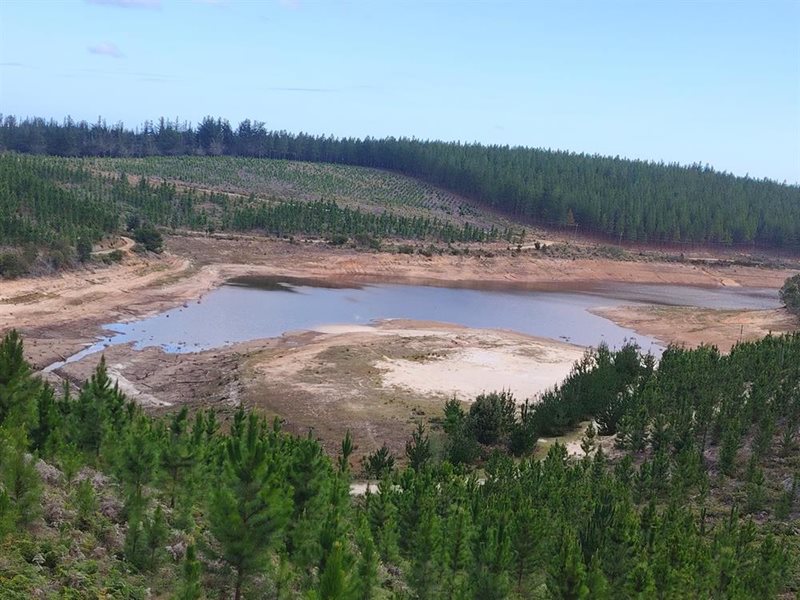
KNYSNA NEWS - For several months, residents across greater Knysna have been living under ongoing water restrictions amid a prolonged water supply crisis, with concerns at one stage raising fears of a potential Day Zero scenario. The restrictions, introduced to manage declining water resources, have significantly affected households, businesses and local service delivery.
Following the recent severe weather conditions and widespread rainfall across the Garden Route, residents are asking whether water restrictions could now be eased and whether existing storage systems, reservoirs, and pumping infrastructure are effective during periods of intense rainfall.
Local rainfall data indicates that 6 May marked the peak of the storm in Knysna, with the municipality and surrounding catchment areas receiving between 80mm and 180mm of rainfall, and higher localised totals recorded in forested and elevated zones. The heavy downpour formed part of a larger cut-off low weather system that brought flooding, infrastructure strain and widespread disruption across the region.
As communities begin assessing the aftermath of the storm, attention has increasingly turned toward the resilience of municipal infrastructure under extreme weather conditions, particularly stormwater systems, pump stations and water supply networks.
Municipality responds
Knysna Municipality has acknowledged that several pump stations and electrical infrastructure components experienced operational strain across parts of the water and sanitation network. Read the full article at www.knysnapletherald.com
It said the disruptions were primarily caused by flooding, power interruptions and increased system demand, which collectively affected normal operations.
"The municipality is currently compiling a detailed technical assessment of all affected infrastructure and will communicate confirmed findings once the assessment process has been concluded," it said, adding that some infrastructure was directly affected by flooding, while recovery operations were delayed due to the time required for reservoir levels and network pressure systems to stabilise after outages.
Disaster response activated
The municipality's disaster and emergency response protocols were activated through the joint operations centre (JOC), which co-ordinated multi-departmental response efforts across various municipal departments and external stakeholders.
Response measures included:
- Continuous monitoring of weather conditions and alerts
- Deployment of emergency response teams
- Placement of sandbags in vulnerable and low-lying areas
- Stormwater management interventions
- Road closures where necessary to ensure public safety
- Ongoing communication with affected communities.
The municipality stated that these interventions were critical in managing the immediate impact of the storm and ensuring co-ordinated emergency response across affected areas.
Funding clarification
The municipality clarified that a previously referenced R20m allocation was not deposited directly into Knysna Municipality, but instead transferred to a water board for implementation. While the commitment was made in relation to Knysna's water infrastructure needs, the municipality confirmed that implementation responsibility rests with the Overberg Water Board.
Infrastructure under pressure
Officials emphasised that the exceptionally high volumes of rain fell over a short period, placing significant pressure on already strained municipal infrastructure systems.
While mitigation measures and ongoing infrastructure upgrades assist in reducing risks, no infrastructure system can fully eliminate the impact of extreme weather events, particularly during prolonged and intense rainfall.
Assessments are currently under way to determine the full extent of damage and to evaluate how infrastructure performed during the storm. These findings will form part of a broader post-disaster review and recovery planning process.
Ongoing interventions
Municipal teams are still doing recovery and maintenance operations across the region. These include ongoing stormwater clearing, monitoring of high-risk flood zones, deployment of response teams, distribution of sandbags where necessary, and routine infrastructure inspections.
The municipality also confirmed continued co-ordination through the JOC to ensure rapid response in the event of further rainfall, while weather alerts from the South African Weather Service are being closely monitored.
Long-term resilience planning
The municipality says the strengthening of long-term infrastructure resilience will be prioritised to improve its ability to withstand future extreme weather events and ensure more reliable service delivery during periods of climate stress.
This includes evaluating stormwater capacity, upgrading critical infrastructure, improving flood mitigation systems, and enhancing disaster preparedness strategies.
‘We bring you the latest Garden Route, Hessequa, Karoo news’