

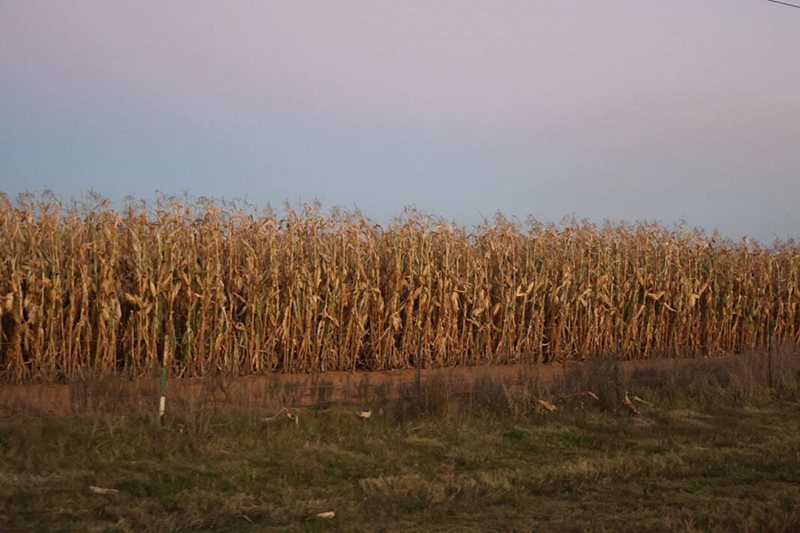
AGRICULTURE NEWS - Speaking to Farmer’s Weekly at Nampo Harvest Day 2026, May said the scale of pressure facing producers this season has prompted discussions between financiers and government on possible interventions to prevent widespread financial fallout.
“Banks need to make a concerted effort to support farmers this year, because the financial system could collapse if farmers are not able to repay their loans,” he said.
Farmers are being squeezed from multiple directions simultaneously. May noted that input costs had surged by roughly 40% in recent months due to the escalating Middle East conflict, while commodity prices have weakened sharply.
“White maize prices are down 30% and yellow maize prices down 20% year-on-year. Many grain producers will struggle to break even,” he added.
The situation this year is particularly dire since many grain producers diversified their operations with livestock, which provided income support when grain prices were low. However, due to the foot-and-mouth disease crisis, livestock sales have slowed down.
“Farmers are really in deep, deep water, and further increases in oil prices could push many farming businesses beyond recovery,” May said.
He noted that oil prices currently stand at around US$110/barrel (about R1 800/barrel), but if prices approach US$140/barrel (R2 300/barrel), the impact will be “catastrophic” for producers.
May said that only farmers with strong financial reserves are likely to withstand prolonged pressure, while new entrants remain especially vulnerable due to limited financial buffers.
He added that this poses a significant risk to agricultural transformation efforts.
Transformation under pressure
May said early engagement between farmers, financiers, and suppliers will be critical ahead of the next production season, particularly as many new entrants might not generate enough income from the current harvest to finance planting.
Speaking about progress in transformation of the grain industry, he said Land Bank has shifted towards a more holistic farmer support model, moving beyond financing alone to actively identifying and mitigating production risks. This includes working with agronomists to assess yield potential, helping farmers prioritise stronger-performing fields, adjusting crop choices where necessary, and incorporating insurance into financing packages.
The bank is also partnering with organisations such as Grain SA and input suppliers to strengthen farmer support systems.
May concluded that blended finance schemes, which reduce repayment obligations for emerging farmers, are also helping to improve new entrant resilience.
Article: Farmer's Weekly
‘We bring you the latest Garden Route, Hessequa, Karoo news’