

KNYSNA NEWS - When the call comes, there is no time to think about the weather, the hour or what might lie ahead.
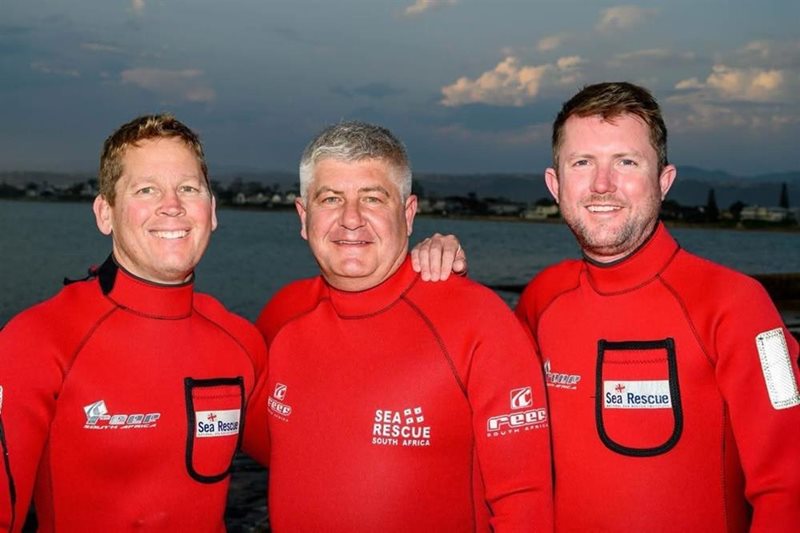
For Jerome Simonis, Grant van Staden and Declan Nurse, answering that call has been part of their lives for 25 years.
The three Knysna men have each been awarded honorary life membership of the National Sea Rescue Institute (NSRI), marking 75 years of combined voluntary service at Station 12.
Their stories are different, but their commitment is the same: to go where others cannot and bring people home.
Simonis, the current station com-mander, has led Station 12 for 12 years. His NSRI journey began while working at Featherbed Nature Reserve, where he regularly watched rescues unfolding in the Knysna Heads.
"I was able to go to the top of Western Head and see the casualties in the water below and report their whereabouts to the rescue station," he recalls.
After numerous phone calls, then station commander Mike Elliot invited him to an interview as a prospective trainee crewman.
One of Simonis' earliest memorable experiences came before he was even qualified for sea rescue: helping rescue a whale and her calf near the wreck of the Emu.
Over the next quarter-century, Simonis faced far greater challenges. One of the most demanding was the grounding of the bulk carrier Kianu Satu in August 2013. With the Knysna Heads too dangerous to negotiate, the rescue craft was trailered to Buffalo Bay and launched in darkness in 6m swells and gale-force winds.
The operation lasted several days. All 19 crew members were eventually evacuated safely, and the vessel wastowed out to sea nine days later.
Another rescue that stands out was the shark attack on surfer Calab Swanepoel at Buffalo Bay in June 2017, Simonis' first major rescue as station commander. Nurse was also involved in the emergency response.
Swanepoel suffered severe trauma and was airlifted to George Hospital. Remarkably, he returned to the ocean a month later and went on to become a seven-time South African adaptive surfing champion and represent his country internationally.
But some call-outs remain with rescuers for very different reasons.
Simonis remembers the Italtile aircraft crash off Robberg in February 2011, in which everyone aboard was killed. Knysna and Plettenberg Bay NSRI crews worked together in the search-and-recovery operation. "Pulling aircraft debris and human remains into an open rescue boat is not what we had ever practised, yet it is what we had to do to honour the families who were waiting for answers back on the beach," he says.
For Van Staden, the connection with the NSRI began in childhood. His father joined the organisation when he was young, and he spent many weekends at the base while crews trained.
"I was therefore part of the NSRI family from very young and knew from then that it was an organisation that I wanted to be a part of," he says.
That sense of family has remained at the heart of his 25 years of service.
Van Staden says much the same: "My NSRI family is very important to me and I trust them implicitly. Together we reunite families and support each other on the occasions when we deal with some extremely difficult situations."
‘We bring you the latest Garden Route, Hessequa, Karoo news’