

GARDEN ROUTE NEWS - amaBhungane’s recent investigation into some dealings between PetroSA and fuel trader Nako Energy, which ultimately saw low-quality fuel distributed in the Garden Route, has prompted the Automobile Association of South Africa (AA) to call for testing of N-methylaniline (NMA) in the country’s fuel.
The AA released a statement yesterday, 5 October, calling on the Department of Mineral and Petroleum Resources to add this chemical, which is banned as a fuel additive in Europe, China and Russia, to a sample of South Africa’s petrol specification and to begin testing for it.
Currently, the chemical is neither banned nor tested for in South Africa.
The AA’s statement followed amaBhungane’s 17 September publication titled “PetroSA was owed R227m. It may end up losing R1.4b”.
This investigative piece says PetroSA owed the junior fuel trader R605m for a 2024 cargo of fuel, which had NMA added to it, that the company had bought and struggled to sell while Nako owed PetroSA R832m for a cargo of diesel it had bought and never paid for.
amaBhungane’s article says the two companies met in May 2025 and struck a deal that PetroSA would buy another 11 consignments of cargo of unleaded petrol from Nako and receive a discount of 45c per litre.
Once PetroSA had sold 505 million litres of fuel, it would be R227m richer, and Nako’s debt would be “eliminated”.
However, the deal did not pan out as PetroSA had hoped, and, according to amaBhugane, once Nako had PetroSA’s signature on an acknowledgement of debt, this document was ceded to Nako’s creditors, whose attorneys then came calling, demanding payments on the same shipment of fuel.
The article says Nako applied to the Western Cape Division of the High Court for an order placing PetroSA under provisional liquidation.
An article The National published on 5 October says the matter will be heard in court on 15 October.
Meanwhile, the AA says that its concern is the three consequences that reach motorists, fleet operators and taxpayers, however the litigation ends: how fuel quality is regulated, how public liabilities are transferred, and who holds the country’s fuel stock.
The association made it clear that it takes no position on the merits of the dispute.
“The publication reports that an internal PetroSA investigation found that petrol had ‘reacted to car paint’, and that affected vehicles were repainted by panel beaters in Mossel Bay,” says the AA’s statement.
“It also reports that Sasol and Astron Energy found more than 6% of N-methylaniline in the product, against a recommended level of around 1.2% cited by the Fuels Industry Association.”
AA CEO Bobby Ramagwede says that a specification that does not test for a substance is not a specification at all, but merely a document.
“Motorists on the Garden Route bought petrol at ordinary forecourts, watched the paint come off their cars, and paid the panel beater for the repairs themselves,” says Ramagwede.
“The AA calls on the Department of Mineral and Petroleum Resources to add N-methylaniline to the national petrol standard and publish the sampling protocol. Tell the country when the first test will be run and who will run it. If that cannot be done this financial year, the department should say so, and say why.”
The statement then touched on PetroSA’s R4b owed to Sars in unpaid taxes, which Mossel Bay Advertiser reported on in December last year.
amaBhungane’s reports note this too. The article also reports that PetroSA owes more than R700m to the fuel trader Addax, and that it closed the 2023 financial year with R3.5b in unpaid trade payables. It further reports that Plane Tree Capital, which now holds Nako’s claim, has demanded R620 519 979 plus interest.
“Before a single liability is transferred, we also call for a full audited schedule of what the public is absorbing to be tabled,” Ramagwede adds.
“A motorist who pays the fuel levy is a creditor in this story, and creditors are entitled to a statement.”
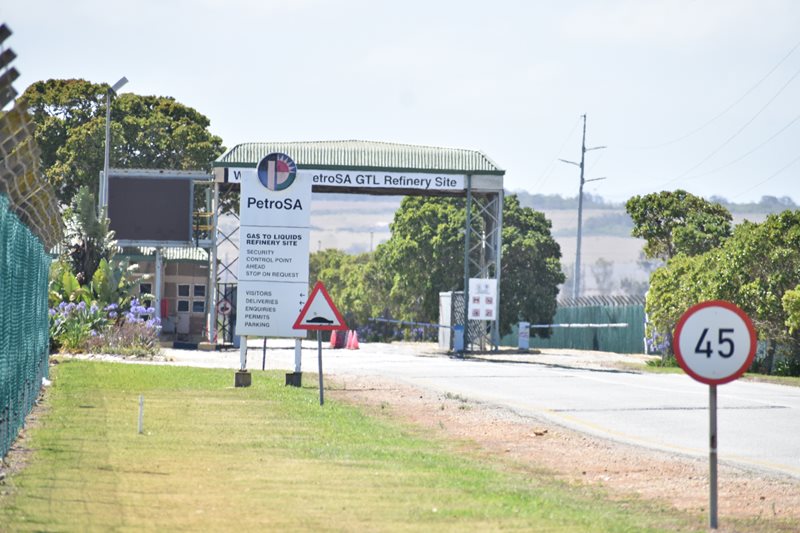
The AA also cautioned against describing the matter as the end of domestic refining, as the Mossel Bay gas-to-liquids plant had stopped producing as far back as 2020.
“Liquidation would not close a working refinery. It would formalise a closure that happened six years ago,” Ramagwede says.
“The live exposure is storage capacity, import terminals and custody of national fuel stock. Those are the questions fleet operators should be asking this week. Nobody has answered them in public to date.
“Any fleet buying fuel in bulk in this country should insist on a certificate of analysis tomorrow morning. It costs almost nothing. One large operator doing it makes it the norm for everybody else,” says Ramagwede.
What the AA is asking for:
• that N-methylaniline be added to the national petrol specification, with a published test method and a date for the first test.
• a published national fuel quality testing regime: who samples, at which depots and forecourts, how often, with results published quarterly.
• a full, audited schedule of PetroSA’s liabilities tabled before Parliament votes on the South African National Petroleum Company Bill.
• a clear route to redress for motorists whose vehicles were damaged: who is liable, and how to make a claim.
• monthly publication of national days of cover for petrol and diesel.
What corporate South Africa can do without waiting
The AA is asking fleet operators, logistics companies and independent retailers to require a certificate of analysis with every bulk fuel delivery, and to keep a retention sample of each load.
Mossel Bay Advertiser has sent media enquiries to the department, Nako and PetroSA. Their responses will be added to the article as soon as they have been received.
ALSO READ: Sars moves to attach Mossel Bay refinery
‘We bring you the latest Garden Route, Hessequa, Karoo news’