

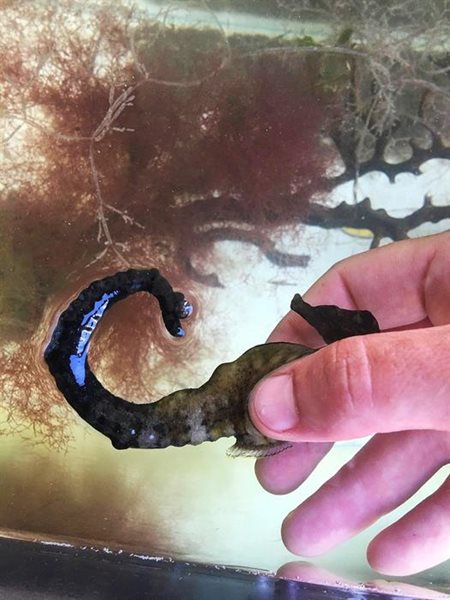
KNYSNA NEWS - Two seahorses at the Knysna SANParks estuary facility have been given a second chance after developing a potentially fatal condition that left them unable to control their movement in the water.
The resident seahorses had developed external gas bubble disease, in which tiny gas bubbles form beneath the skin. The condition causes affected animals to become helplessly buoyant, leaving them floating upwards and unable to settle, feed or move normally.
The estuary team called on local veterinarian Dr Rolf Lamprecht, who assists the Knysna SANParks Honorary Rangers with the estuary's marine life. Treating the delicate animals required precision.
Lamprecht first adminis-tered clove oil, a mild anaesthetic commonly used to sedate fish and other aquatic animals.
Once the seahorses were safely sedated, he used a fine needle to carefully draw the trapped gas from beneath their skin, a procedure requiring accuracy and a gentle touch, given their small size and fragile bodies.
The results were almost immediate. Within minutes, both seahorses were upright and swimming normally again.
Without intervention, gas bubble disease can be fatal, while successful treatment can allow an affected seahorse to return to normal activities such as feeding and resting.
For Sabine Schukai, SANParks Honorary Ranger and chairperson of the Knysna region, the successful treatment highlighted the value of local partnerships in protecting the estuary's marine life. "Volunteers, rangers and a veterinarian all worked together to provide expert care to two of the estuary's smallest residents. The rescue also serves as a reminder that conservation is not always about dramatic interventions. Sometimes it is a steady hand, a fine needle and an expert willing to help that give a seahorse the chance to swim normally again," she said.
‘We bring you the latest Garden Route, Hessequa, Karoo news’