

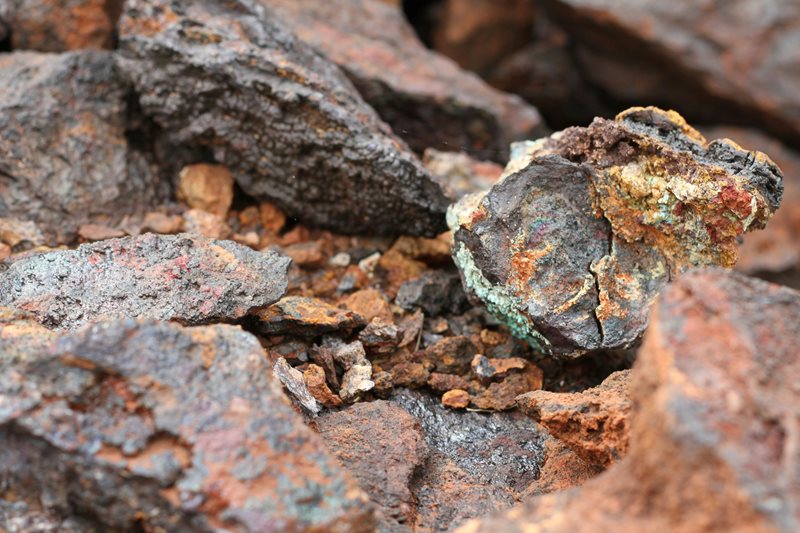
ENVIRONMENT NEWS - As governments and companies race to cut greenhouse gas emissions, another race is quietly heating up: the scramble for critical minerals, the raw elements and metals that power solar panels, wind turbines, batteries, electric vehicles (EVs) and hydrogen technologies.
Critical minerals are defined by two things: their central economic importance to low-carbon technologies, and the vulnerability of their supply chains to disruption.
Major examples of these minerals include lithium, cobalt, nickel, graphite, copper, rare earth elements (like neodymium and dysprosium), platinum group metals and manganese.
These minerals are essential inputs to batteries, permanent magnets, electrical wiring and catalysts that underpin the energy transition.
Globally, the geology and the industry are unevenly distributed. Australia, Chile and China dominate lithium supply and processing. The Democratic Republic of Congo (DRC) supplies the lion’s share of mined cobalt. China is the world’s powerhouse for refining and processing many battery and rare-earth materials.
Copper — crucial for electricity grids — is mined in large volumes in Chile, Peru and Zambia. The International Energy Agency (IEA) and geological surveys warn that meeting ambitious climate targets will require a steep expansion in mining and refining capacity, therefore, greater attention to where those minerals come from.
Africa stands at the centre of this contest. The continent is home to large, sometimes dominant, reserves of many critical minerals: the DRC for cobalt and copper; South Africa for platinum-group metals (PGMs) and manganese; Zimbabwe and Namibia for lithium; Mozambique and Madagascar for graphite; and Zambia for copper and growing battery-metal projects.
These deposits have attracted multinational miners, strategic state partnerships and an expanding set of downstream investors, from chemical processors to battery manufacturers, keen to shorten supply chains and reduce dependence on single-country processing hubs.
How African countries are positioning themselves
African governments are pursuing several parallel strategies to capture more value from their mineral wealth. First is resource control and revenue capture: recent shifts in the DRC — including export controls and quota systems for cobalt, and state companies marketing their output directly — aim to increase state revenue and bargaining power with traders and manufacturers.
Those moves, while intended to boost local benefit, have tightened global supply and pushed prices higher in 2025, illustrating the leverage producer nations can exert.
Second is local beneficiation which entails moving beyond raw ore exports to refining and chemical processing within Africa. Zimbabwe has adopted lithium-beneficiation policies to encourage in-country processing and value-addition, while projects in Namibia (such as Karibib and other pegmatite developments) are being structured with partners that could enable local processing capacity over time.
South Africa’s large PGM refining and catalytic industries already give it stronger downstream positioning compared with many peers. Such policies are motivated by job creation, industrialisation goals and the desire to avoid the commodity trap, meaning an economic state where a country heavily relies on exporting unprocessed primary goods like oil, minerals and crops.
Third, countries are seeking strategic partnerships and investment. State mining firms and national resource agencies are signing deals with global traders and processors to build export infrastructure, secure financing and develop traceability systems. These steps are meant to make their minerals more attractive to ethical, low-carbon supply chains and to meet due-diligence demands from buyers.
For example, partnerships that pair a state miner with an experienced trader can help overcome logistics and financing gaps while giving host countries more control over sales.
Finally, governance and environmental safeguards are rising on the agenda. Civil society and international buyers want assurances on human rights, artisanal mining safety, water use and biodiversity impacts.
African governments are under pressure to implement stronger regulation, improve community benefit schemes and ensure that mining does not replicate the environmental and social harms associated with fossil fuels extraction.
The balance between rapid development and responsible oversight will shape whether critical mineral booms translate into sustainable development gains, argued an article authored by scholars James Boafo, Jacob Obodai, Eric Stemn and Philip Nti Nkrumah, published by ScienceDirect academic publishing.
Critical minerals are not a peripheral issue, they are a structural requirement for decarbonisation. The IEA’s modelling shows that demand for many of these minerals will multiply several times over by 2040 under net-zero or even stated policy scenarios, meaning supply bottlenecks or geopolitical moves can slow down clean technology rollouts.
For African nations the implications are stark. If managed well, critical minerals can finance industrialisation, infrastructure and energy access. If managed poorly, they risk creating new dependencies, environmental harm and social conflict, argued a report released by the IEA.
As the global green economy grows, the question for African leaders will be how to convert deposits into durable development gains. Through smarter contracts, local processing, environmental safeguards and stronger negotiating power in a market that prizes both the metal and the stories of clean, ethical supply.
For the rest of the world — industrial buyers, finance institutions and climate policymakers — the message is equally clear: meeting climate goals will require not only more batteries and turbines, but also fair, sustainable and resilient mineral supply chains whose benefits extend to the communities and countries that produce them.
‘We bring you the latest Garden Route, Hessequa, Karoo news’