

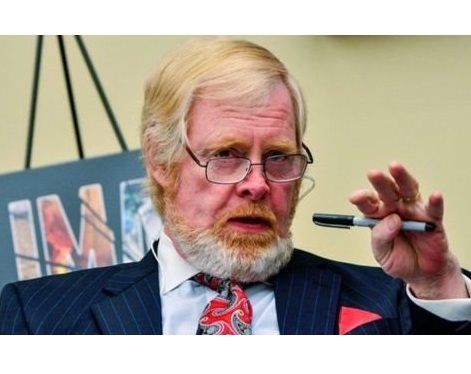
NATIONAL NEWS - The United States (US) Ambassador Leo Brent Bozell III has been issued a démarche again over alleged undiplomatic conduct, as tensions between Pretoria and Washington continue to intensify.
It was the second démarche against Bozell in recent months.
In March, Bozell was issued a démarche order over remarks on South Africa’s current policy trajectories.
‘Kill the Boer’
He had then made special mention of the ‘Kill the Boer’ chant, declaring it hate speech, and saying he “didn’t care” about the Constitutional Court’s ruling on the matter.
He later apologised for the comments.
Démarche
Bozell was hauled before the Department of International Relations (Dirco) this week for a formal dressing-down over his sharp attacks on Pretoria in recent media interviews.
The démarche, delivered on Tuesday, followed a string of remarks in which Bozell criticised the South African government’s handling of Washington’s demands.
A senior Dirco official confirmed Bozell has been démarched and called in to explain what it described as “undiplomatic conduct.” The official said both countries remain committed to resolving outstanding bilateral issues.
AfriForum
AfriForum CEO Kallie Kriel was not happy about the action taken against Bozell.
“A very, very stupid move, Dirco, that goes against the interests of ordinary South Africans. Politicians in South Africa will continue to enrich themselves, while ordinary people will bear the brunt of this move,” he said in a post on X.
Visa restrictions
Bozell’s comments centred on President Donald Trump’s 27 August message to Cyril Ramaphosa, pressing for updates on how South Africa was addressing five contentious domestic policy issues.
Bozell has repeatedly said in interviews that Ramaphosa failed to respond meaningfully to the five domestic policy demands the Trump administration set for Pretoria.
He warned Pretoria that the new visa restrictions targeting foreign nationals accused of involvement in race-based discrimination, slapped on the country by US Secretary of State Marco Rubio, are just the beginning to show “America’s firm resolve in this matter.”
Five asks
Rubio had announced new visa restrictions targeting foreign nationals accused of involvement in race-based discrimination and uncompensated land seizures in South Africa.
He said the order was followed by months of dialogue throughout 2025, culminating in December with five specific asks from Washington.
“In my meeting with President Ramaphosa, I tried to emphasise just how simple this process was.
“The first ask was for government to leave the US refugee programme alone after a dispute in December. Asked and answered, done,” Bozell said.
Land expropriation
Bozell said the second dealt with expropriation without compensation.
“To us, it would be a direct threat to investment in your country. In our country, you’ve got to have a justified expropriation, and then fair market compensation for it. Now, this one’s in the courts. People believe the courts are going to rule it unconstitutional, and that’s going to be the end of it.”
Kill the Boer
The third ask was for President Ramaphosa to condemn the “kill the Boer” chant.
“Kill the Boer, kill the farmer” as incitement to violence. This is a concept that is endorsed by three-quarters of the South African people. I’ve seen the polling data,” Bozell alleged.
Claims rejected
Pretoria has consistently rejected claims of systemic discrimination, with Ramaphosa insisting there is “no evidence of persecution against white people” and warning that narratives of white victimhood threaten post-apartheid unity.
Ramaphosa has previously said there is “no evidence of persecution against white people”, and warned that such claims threaten national unity.
Criticizing hosts
At the receiving of credentials from 20 ambassadors in April, Ramaphosa said he welcomed them to South Africa, just as their heads of state had welcomed South African ambassadors and high commissioners.
“As president, whenever I appoint ambassadors and high commissioners to your country, I expect them to respect your country’s sovereignty and promote good relations between our two nations. I expect them to promote trade and investment opportunities in our respective countries.”
Ramaphosa said ambassadors should never criticise their hosts in public.
“Whenever I send our Ambassadors and High Commissioners to various countries, I always make it a point to inform them that they should never criticise their host countries publicly and in a confrontational manner, but should always seek to raise issues privately and constructively,” Ramaphosa said.
“They should always seek to build relationships with various stakeholders in the host country. They should always choose to preserve dignity and partnership between our respective countries. It is this approach that I believe builds strong relationships between nations and helps to advance the interests of our respective countries based on mutual respect.”
Past injustices
In his weekly newsletter on Monday, Ramaphosa emphasised that measures to correct past injustices cannot be equated with apartheid oppression.
“There is no moral equivalence between redress and discrimination. There is no equivalence between legitimate, constitutionally grounded measures of redress, and the systematic racial oppression of apartheid,” he declared.
Disappointed in Ramaphosa
Bozell stressed that the demands were straightforward and aimed at addressing Trump’s concerns over rural safety, investment security, and broader strategic issues.
He expressed “disappointment” in President Ramaphosa’s handling of relations, saying Washington has “run out of patience.”
Mbeki the best person?
Bozell also moved to set the record straight, stressing that while he holds former president Thabo Mbeki in high regard, he did not call for Mbeki to intervene or mediate South Africa’s strained bilateral ties with Washington.
During an interview, Bozell reportedly described Mbeki as the “best person” to resolve the diplomatic impasse between Washington and Pretoria, citing his stature and experience in global diplomacy.
Bozell argued that Mbeki’s credibility made him uniquely suited to mediate.
“Mbeki is the best person to break this impasse. He understands the mechanics of global diplomacy better than anyone else in South Africa,” he said. “He has the gravitas to sit across the table and get both sides talking again.”
Mineral wealth
On Tuesday, Minister in the Presidency Khumbudzo Ntshavheni said Pretoria had engaged Washington over its concerns, saying the battle over access to the country’s critical minerals is among the issues straining relations between the two countries.
Ntshavheni delivered a blunt message on South Africa’s mineral wealth, insisting that critical resources will not be negotiated away to satisfy foreign interests.
“We are non-negotiable. The minerals of this country, in particular the critical minerals, must be used to benefit South Africans first and foremost,” Ntshavheni said.
“South Africans must participate not only in the money, in the extraction of those minerals, but also in the beneficiation. Africa can no longer continue to be exporters of rock and dust.”
Ntshavheni stressed that beneficiation of critical minerals is central to the development of South Africa, the SADC region and the continent.
Dialogue
Ntshavheni confirmed South Africa remains open to dialogue but will not compromise sovereignty.
“It depends on the US. South Africa is willing to resolve any issue, any difficulty, but our resolution does not mean we compromise our national interest. Everybody works for their own national interests. That’s what we are, a sovereign state.”
Issues addressed
She acknowledged that three of the five issues raised by Washington had been addressed, but said sticking points remain around BEE in mining and IT.
“BEE is part of our national legislation. You cannot just remove it on a whim. Are we ready as a country to remove BEE? No, we are not, because BEE is not for itself. It is for the transformation of this country.”
Article: Caxton publication, The Citizen
‘We bring you the latest Garden Route, Hessequa, Karoo news’