

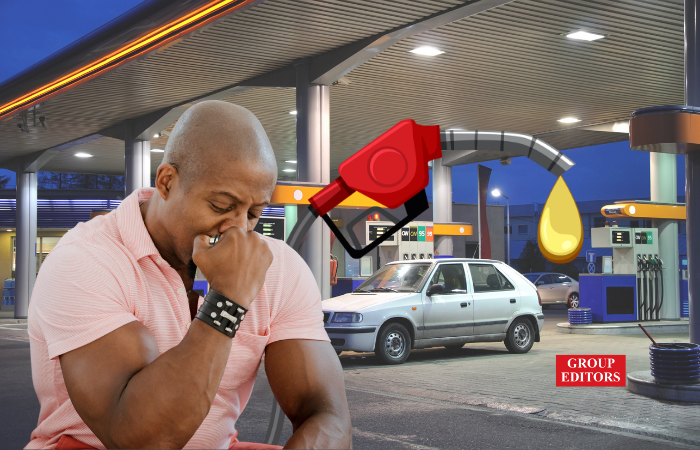
NATIONAL NEWS - With some experts saying the government could intervene with the sharp fuel price increases, others warn the worst is yet to come.
AfriForum spokesperson Ernst van Zyl said government is responding like a deer in the headlights to the energy crisis: paralysed with indecision.
Government paralysed with indecision – AfriForum
The civil rights organisation has instructed its research department to conduct a comprehensive investigation into the composition of the country’s fuel prices, Van Zyl said.
The probe will focus specifically on the various levies, including the general fuel levy, carbon fuel levy and the Road Accident Fund levy, as well as related state mechanisms.
“In September, we asked Minister of Finance Enoch Godongwana to conduct an independent audit of current fuel prices and levies. There has been no indication that his office intends to undertake such an audit.
“AfriForum has, consequently, decided to conduct the audit itself. It will investigate the calculation of the various levies; their application, efficiency, transparency and proportionality; the use and effectiveness of the funds; the economic impact on consumers, transport operators, agriculture and small businesses; and options for lasting reform to relieve pressure on consumers,” he said.
As early as June, AfriForum urged Godongwana to make the temporary reduction of the general fuel levy permanent or, at a minimum, extend it.
“Since then, oil prices have remained high and the global energy crisis remains unresolved.
Global energy crisis remains unresolved
“This drastic increase in transport expenses will have a devastating inflationary ripple effect throughout the economy, hitting businesses, the agricultural sector, and consumers particularly hard,” Van Zyl said.
The Automobile Association of South Africa (AA) CEO Bobby Ramagwede said government should have played its role aeons ago to remedy this situation.
“In early April, we wrote to government saying we see the writing on the wall and if they don’t make changes, petrol prices will go up to R35/l.
“People should keep in mind it’s not just the R3 increase; in January, we paid about R19/l. That’s a 30% increase in the price of fuel in less than a year,” Ramagwede said.
“The knock-on effect is devastating and when we called on the government to relax taxes, we knew the impact of an increase in distribution costs would strain the average pocket further.”
Economist Dawie Roodt said the country was in trouble, but not because of the fuel price hike.
South Africans can no longer withstand these financial blows
“We are in trouble because we can no longer withstand these kinds of financial blows. That is the real issue.
“It is because government undermines the economy. If we were in a position where the economy was growing at 4% or 5% and took hits like this, we could take it in our stride,” Roodt said.
Because the economy was barely growing, an increase like this could have a major impact and ripple effect.
“We are likely to see an interest rate hike and inflation rising above 5%, Roodt added.
“This means our economic growth will be about 0.7% for the year and with a population growing at 1.3%, we are facing another lost year.
“This can cause prices to rise across the board, which is why the Reserve Bank needs to raise interest rates.
Prices could rise across the board
“By raising interest rates, you remove demand from the economy – and the economy needs demand to grow.
“However, under these circumstances, if you don’t remove some demand from the economy, it will eventually manifest as inflation,” he said.
The Reserve Bank really has no choice but to put the brakes on the economy, Roodt said.
“Raising the interest rates is bad for everyone, but it is the only solution we have right now.”
Article: Caxton publication, The Citizen
‘We bring you the latest Garden Route, Hessequa, Karoo news’