

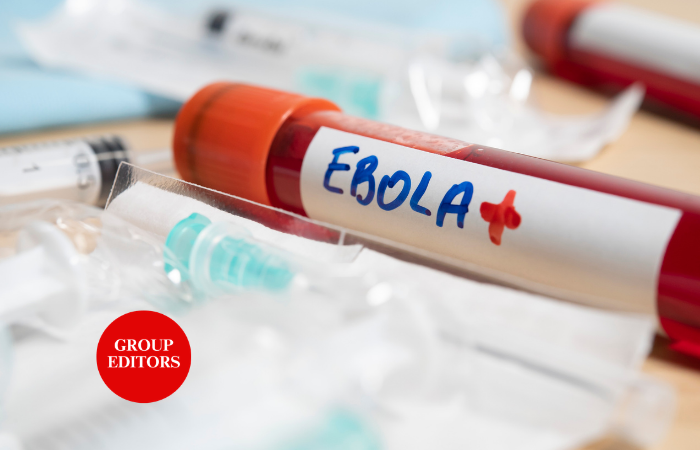
NATIONAL NEWS - The Ebola outbreak in the Democratic Republic of the Congo (DRC) has grown dramatically since international funding was announced earlier this year, becoming the fastest-growing Ebola outbreak on record and the second-largest Ebola epidemic ever documented.
Outbreak worsens despite international support
Health authorities say the outbreak, caused by the Bundibugyo strain of the Ebola virus, has infected 3 605 people and claimed more than 1 587 lives as at 30 July.
The outbreak was first reported in Ituri Province on 15 May, but has since spread to North Kivu, South Kivu, Haut-Uele and Tshopo, raising concerns that ongoing conflict and population movement could fuel further transmission according to the World Health Organisation (WHO).
Funding boosts response efforts
Last month, South Africa's Cabinet welcomed the African Development Bank's (AfDB) approval of US$13 million (about R235 million) in emergency funding to help contain the outbreak in the DRC, Uganda and South Sudan.
The funding supports efforts to strengthen:
- Early diagnosis and testing
- Disease surveillance
- Community awareness campaigns
- Cross-border coordination
- Emergency response teams
The financial package followed calls by President Cyril Ramaphosa, in his capacity as the African Union Champion for Pandemic Prevention, Preparedness and Response, for greater African solidarity and increased investment in African-led healthcare solutions.
Conflict hampers containment
According to WHO, the outbreak is spreading faster than previous Ebola epidemics because many affected communities are located in conflict zones where healthcare workers struggle to reach patients.
Other factors contributing to the rapid spread include:
- Delayed diagnosis
- Undetected transmission chains
- Population displacement
- Overcrowded camps
- Limited healthcare resources
These challenges have made it increasingly difficult to isolate cases and trace contacts before the virus spreads further.
No approved vaccine yet
Unlike the more common Zaire strain of Ebola, there is currently no approved vaccine or specific treatment for the Bundibugyo strain.
However, researchers are making progress.
WHO has launched clinical treatment trials in the DRC, while scientists at Oxford University, together with the Serum Institute of India, have begun early human trials of a Bundibugyo-specific vaccine.
Pharmaceutical company Moderna has also started the first human clinical trial of an experimental mRNA vaccine targeting the strain.
Researchers hope these studies will provide the first effective medical tools against the virus.
Uganda and South Sudan remain on alert
While the DRC remains at the centre of the outbreak, neighbouring countries continue to strengthen surveillance and preparedness.
Uganda has so far contained its imported cases without sustained community transmission, while South Sudan is maintaining heightened monitoring because of its shared border with the DRC.
Finding long-term solutions
Health experts say containing the outbreak will require more than emergency funding.
They believe continued investment in surveillance, rapid diagnosis, local healthcare capacity and vaccine research will be essential to bringing the epidemic under control and preventing future outbreaks.
As scientists work to develop the first vaccine against the Bundibugyo strain, thousands of patients and healthcare workers continue to rely on strengthened international cooperation to limit the spread of one of Africa's most serious public health emergencies.
‘We bring you the latest Garden Route, Hessequa, Karoo news’