

PLETTENBERG BAY NEWS - When Karen Rissik went for a walk along Keurbooms Beach, a little voice in her head told her to turn right.
Her intuition reminded her not to turn left. That simple decision may have saved a life.
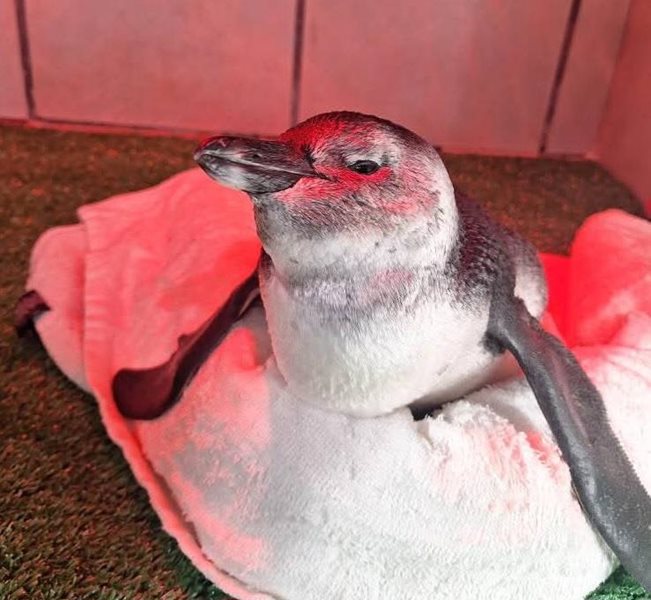
On 26 July, Rissik came across a stranded African penguin lying on the beach, barely moving. She immediately contacted the Stranding Network and sent a precise pin location showing exactly where the penguin was. The little penguin, whom Rissik requested be named Trust, is now being cared for at the Tenikwa Wildlife Rehabilitation and Awareness Centre. Rissik chose the name "to remind one to trust one's own intuition".
Call in the experts
Keri McMorran, managing director of Tenikwa, praised Rissik for doing the right thing by recognising that the penguin needed help and contacting the experts rather than trying to deal with the situation herself. "This is precisely what we encourage people to do when they find wildlife that appears injured, sick, stranded or in distress," said McMorran.
McMorran urged members of the public not to handle distressed wildlife themselves, but to contact Tenikwa, a veterinarian, CapeNature or the Plett Stranding Network for advice instead.
After receiving Rissik's location, the rescue team arranged to meet her and, with her assistance, safely transported Trust to Tenikwa, where the penguin could be stabilised and assessed.
It was soon discovered that Trust was emaciated and severely weakened due to a lack of food in the ocean. When penguins struggle to find enough food, they lose the energy needed to survive at sea and can eventually become so weak that they come ashore.
McMorran said the public should remember that an African penguin found on a Plettenberg Bay beach is likely to be in trouble. "There is no penguin colony in Plettenberg Bay, so when an African penguin comes ashore here, it needs our help," she said.
Don't just put it back
McMorran urged people who find a stranded penguin never to put it back into the ocean. She also warned against approaching the birds for photographs or selfies.
African penguins are wild animals and can bite. Even a strong penguin can experience severe stress when surrounded by people or handled for photographs. Such stress can be particularly harmful to an animal that is already critically weakened.
Tenikwa's wildlife rehabilitation programme provides care for injured and abandoned wildlife from across the Garden Route, with rehabilitation carried out under permit conditions and in conjunction with nature authorities and conservation organisations.
For Rissik, the outcome of her beach walk is a simple but significant one: by trusting her instinct and taking that turn to the right, she helped save the life of a critically endangered African penguin.
‘We bring you the latest Garden Route, Hessequa, Karoo news’